- Sale price: approximately 65,800 euros (75,000 US dollars) before fees, offered without reserve
- Engine: 74 cubic inch flathead V-twin (approximately 1,213 cc), around 30 hp (22 kW) at 4,000 rpm, hand-shifted three-speed transmission
- Condition: non-running, cosmetically refurbished, extensive provenance documentation from the 1984 McQueen estate
Motorcycles with a documented connection to Steve McQueen rarely come to market, and the result reflects exactly that. The VL stood in the actor’s private hall and garage in Ventura County until his death in 1980, waiting for a restoration that McQueen himself could no longer undertake. Nearly half a century later, the motorcycle has now been auctioned again, this time as a rolling piece of Hollywood history in a mechanically untouched condition.
How much did Steve McQueen’s Harley-Davidson VL sell for?
The Harley-Davidson VL achieved a high bid of approximately 65,800 euros (75,000 US dollars) before fees on Bring a Trailer. It was offered without reserve from Neptune, New Jersey, by the dealer who had acquired the motorcycle in May 2026.
The amount does not reach the highest level ever paid for a motorcycle from McQueen’s collection. It is nevertheless notable because the VL was explicitly sold as a non-running project. Such a condition typically depresses value noticeably, yet with a motorcycle that has a provable connection to McQueen, this scale shifts.
What makes the 1931 Harley-Davidson VL technically notable?
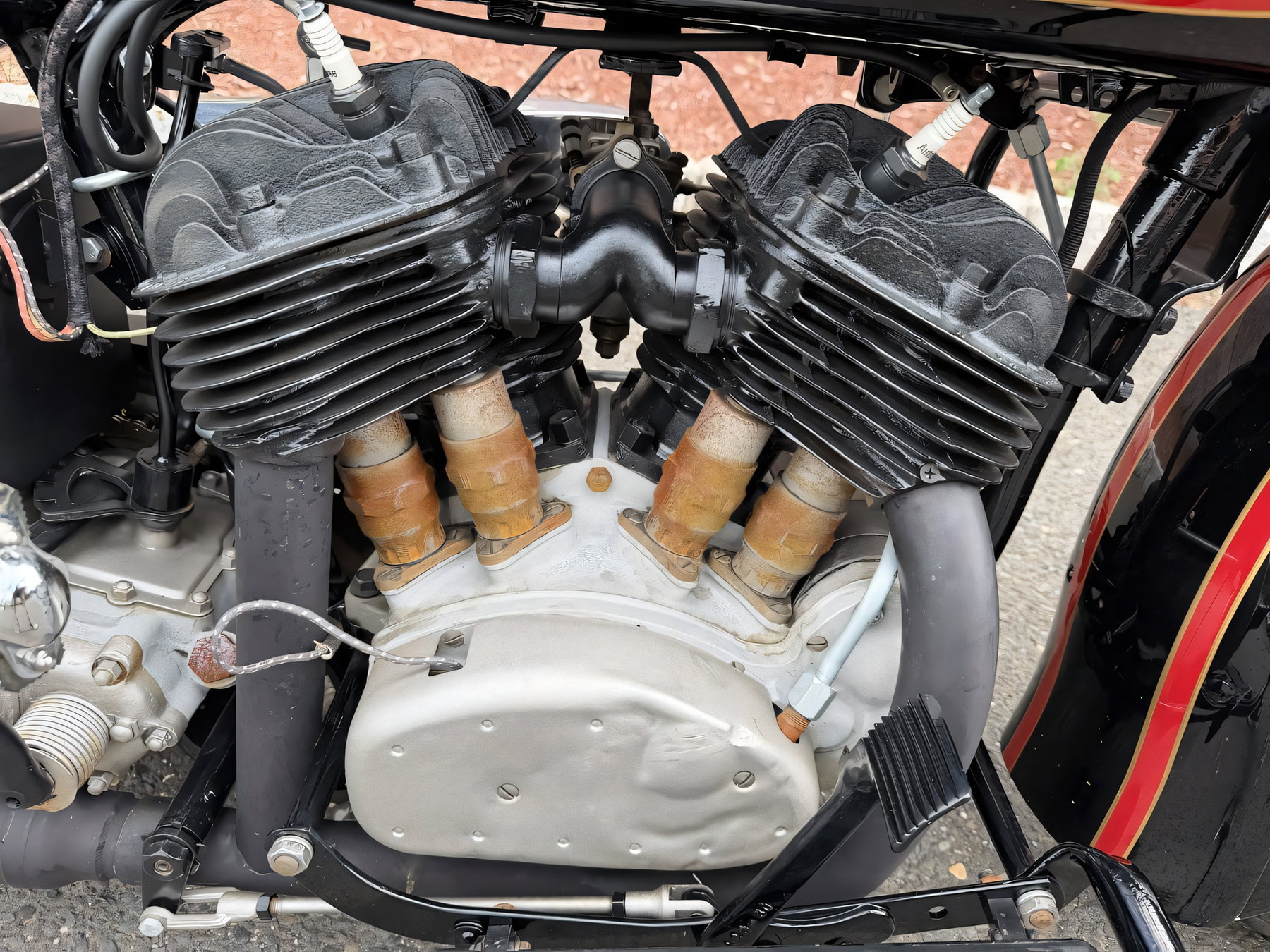
At its heart sits a 74 cubic inch flathead V-twin with approximately 1,213 cc of displacement. In the higher-compression VL version, it produced around 30 hp (22 kW) at 4,000 rpm, while the lower-compression V variant delivered around 28 hp (21 kW).
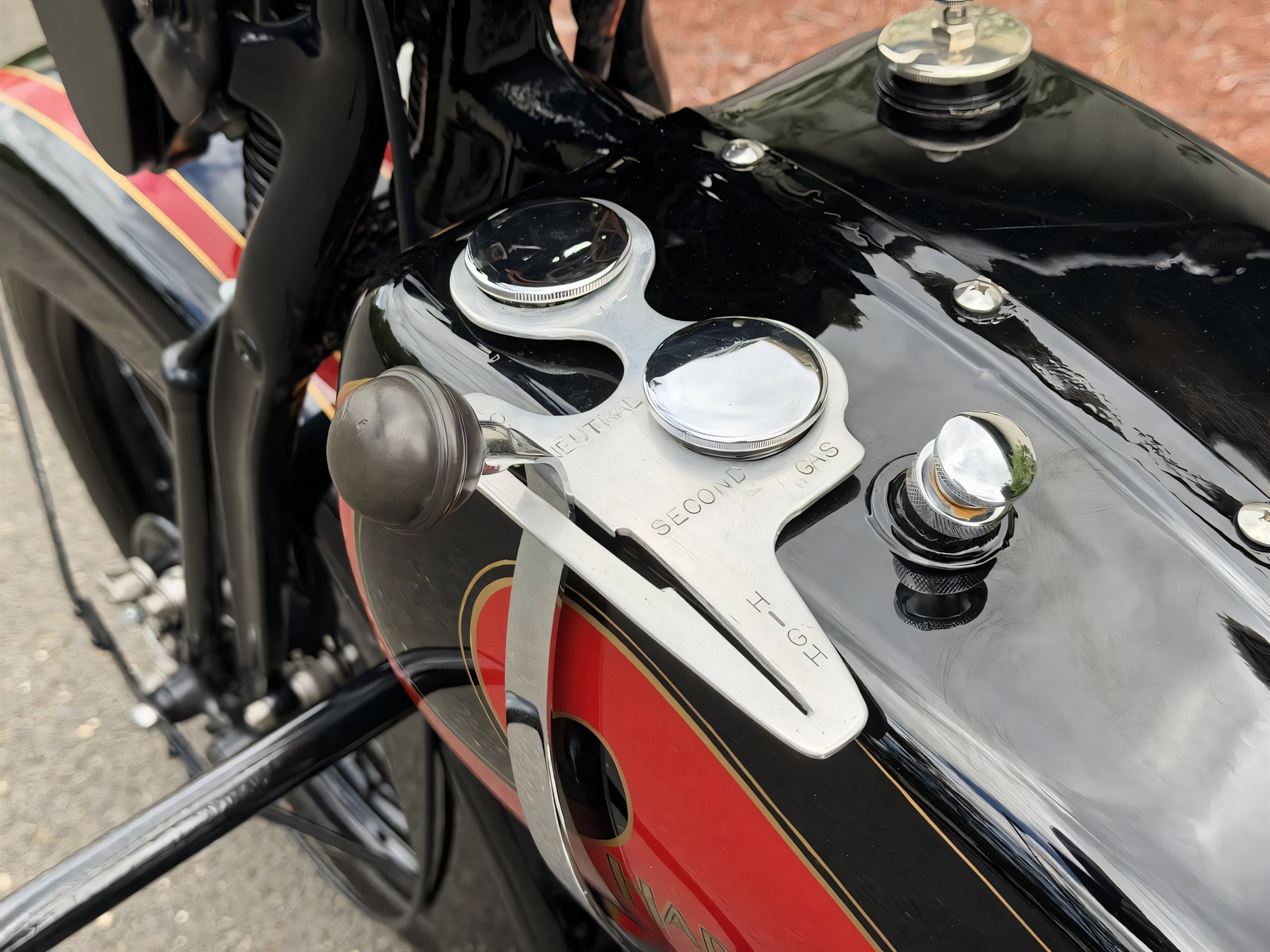
The engine ran a compression ratio of 4.5:1, a bore of 87.3 millimeters and a stroke of 101.6 millimeters. Power reached a hand-shifted three-speed transmission with a tank-mounted gate shifter through a multi-plate dry clutch, while the clutch lever was operated as a foot pedal. Lubrication was still of the total-loss type; a recirculating dry-sump system did not arrive until the U series of 1937. Up front, a springer fork with trailing links provided suspension, while the rear remained unsprung, cushioned only by the sprung solo saddle. Top speed was approximately 137 km/h (85 mph). In the high-compression VL, pistons made of Dow metal were used, a lightweight magnesium alloy that was replaced by aluminum over the course of the early 1930s.
What details characterize the motorcycle that was sold?
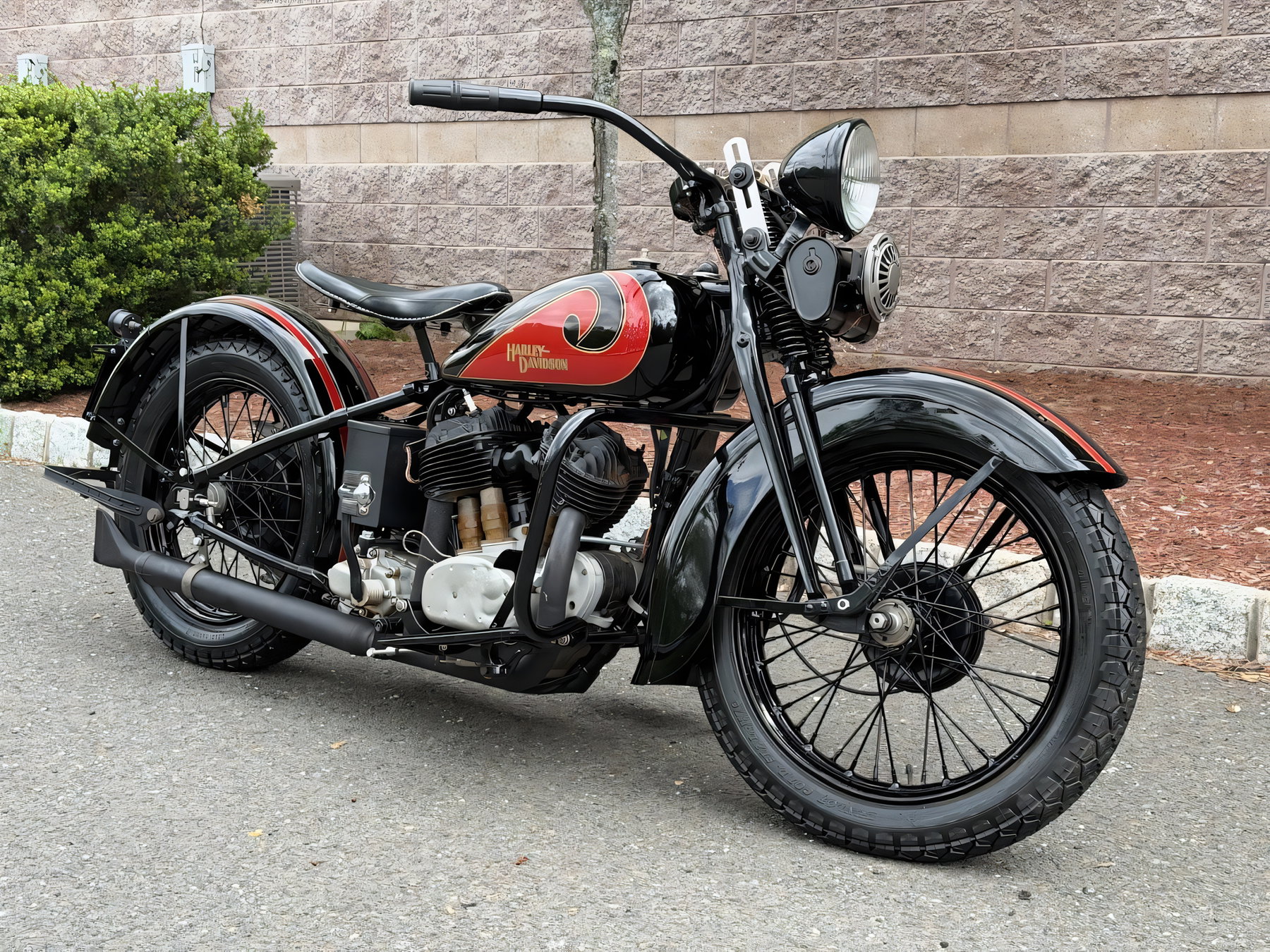
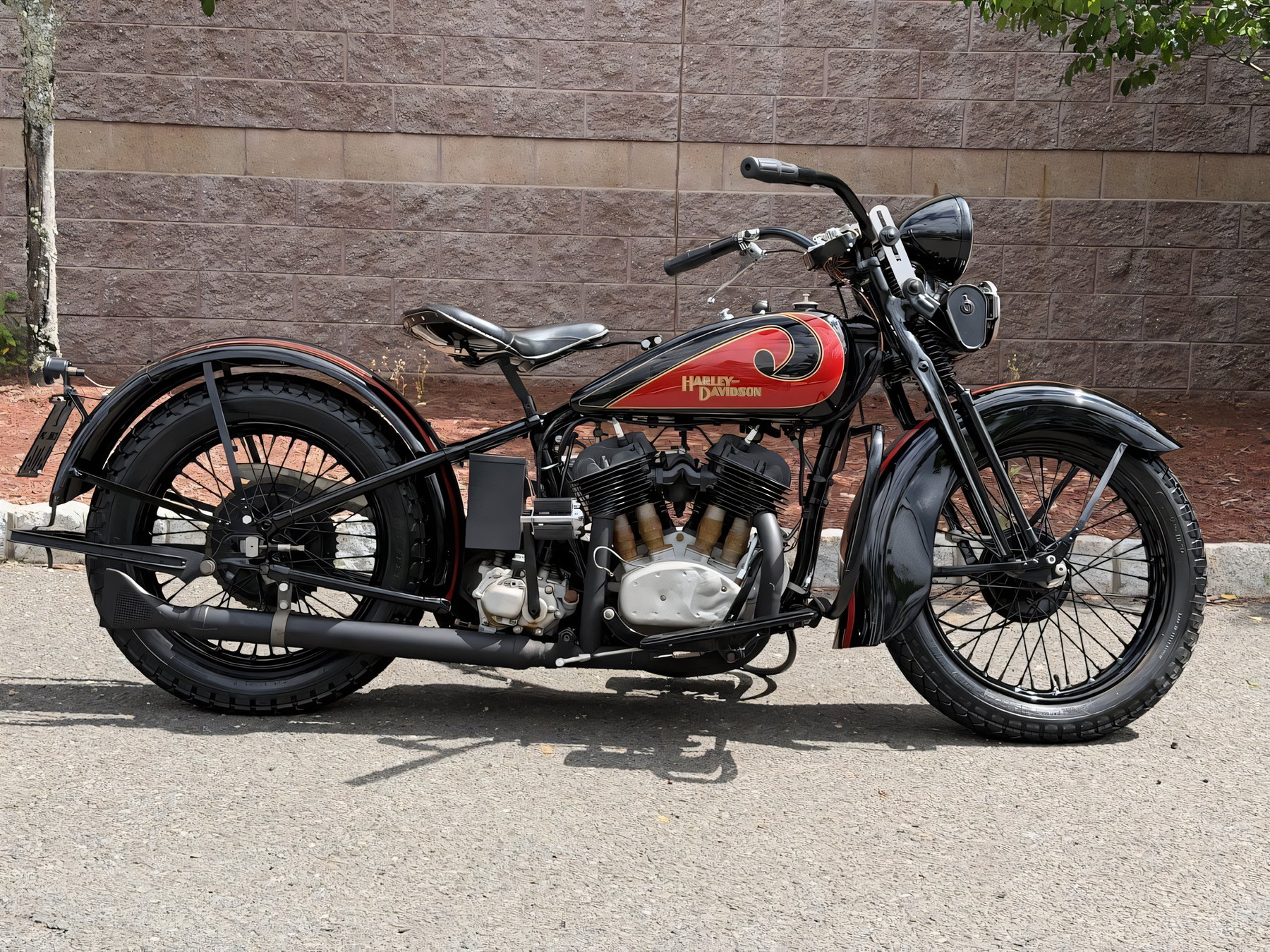
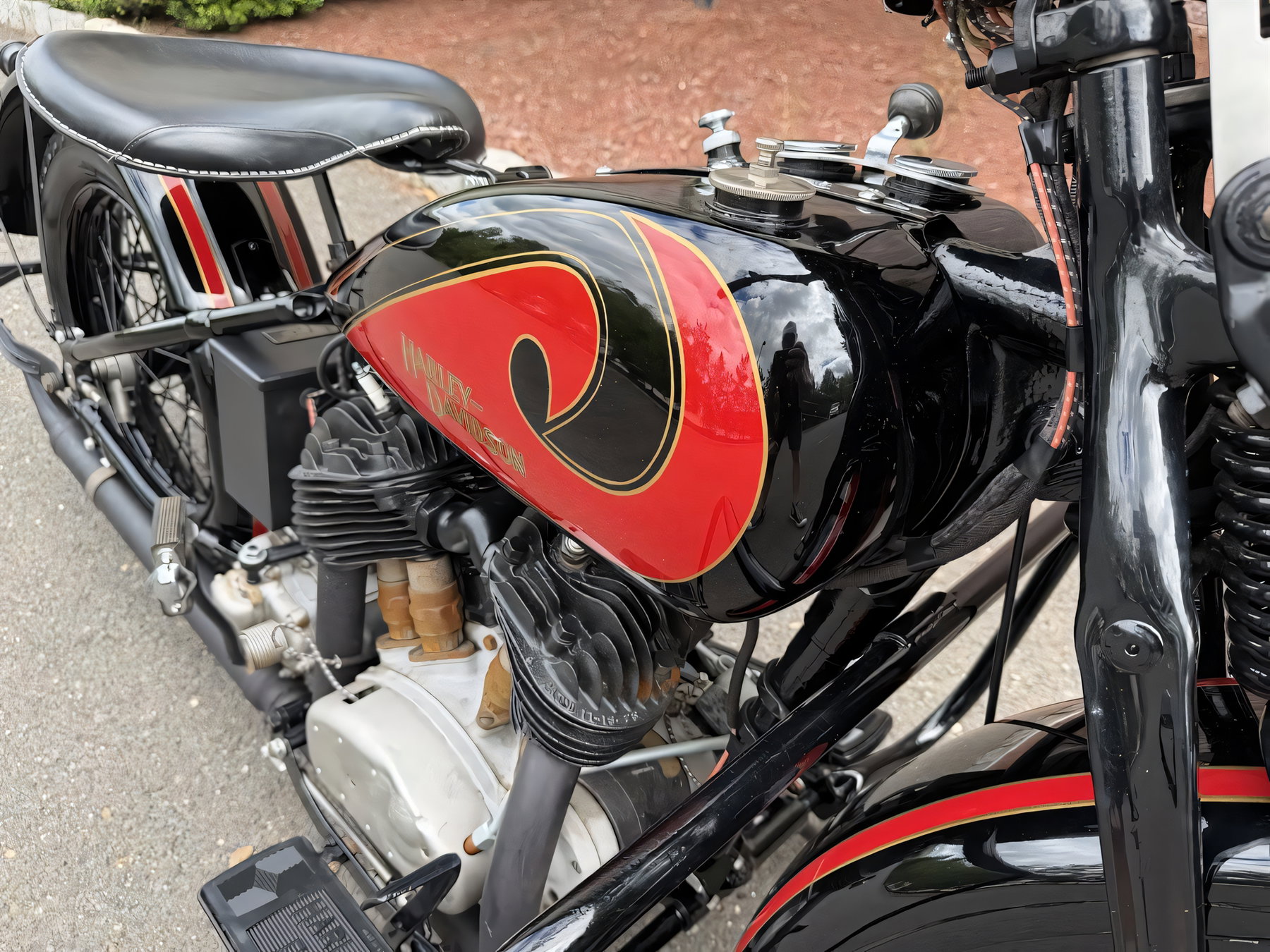
The motorcycle carries engine number 31VL6590 and is finished in black with red, gold-bordered tank stripes. The swept fenders are color-matched, with the rear one designed to flip up. The black rigid frame carries a front-hinged, sprung solo saddle with a black leather cover. Equipment includes an electric horn, a fork-mounted toolbox, floorboards, a Model 2 taillight and both side and rear stands.
The black-painted steel rims are bolted to drum brake hubs and fitted with Dunlop Gold Seal K70 tires that show cracking in the sidewalls. The handlebars feature internal cable routing, with a twist grip for ignition advance on the left and the throttle on the right. The instrument panel houses a Weston ammeter, lockable ignition and light switches and a chrome instrument light. The motorcycle has no speedometer, so the actual mileage is unknown. The V-twin wears a Linkert M51 carburetor with a polished intake bell and a black two-into-one exhaust system with a fishtail end pipe. Cylinders, heads and intake manifolds are painted black, with surface rust visible on the pushrod tubes and various bolts. The engine is currently not running; according to the auction description, the primary chain and some easily replaceable parts are missing.
Why was the V series launch so troubled?
The launch of the new series became a stress test for Harley-Davidson. The manufacturer was late to the flathead game, as Indian was already successful with the Chief and Scout, and the new 74 cubic inch design drew attention for engineering shortcomings in its earliest examples.
The series designated as V was introduced in July 1929 as a 1930 model, just weeks before the stock market crash. On paper, the engine looked like progress, with more power, removable Ricardo-type cylinder heads, interchangeable wheels and a sturdier frame. In practice, the early machines suffered from undersized flywheels, weak valve springs, an overwhelmed clutch and frames that could crack under the increased weight. The V weighed approximately 45 kg (100 lbs) more than the outgoing JD series. After roughly 1,300 units were built, Harley-Davidson halted production for several months to redesign the lower drivetrain. The cost of converting already-delivered machines was reportedly borne by the dealers.
By the 1931 model year, the corrected geometry was factory-installed rather than retrofitted at the workshop. Several detail changes followed: a single seven-inch headlight replaced the earlier twin bullet lamps, a single-pipe exhaust system replaced the trouble-prone four-pipe muffler, a transmission lock prevented shifting without the clutch and chrome plating appeared on a Harley-Davidson for the first time, initially only on small parts.
Where does the VL fit in the model range?
In 1931, the platform was divided into several variants. The V was the low-compression solo version, the VL the high-compression sport solo version and the VC the big-twin model for commercial use. The VS was geared for sidecar duty, various designations such as VM, VLM and VMG denoted magneto-ignition special editions, and police machines were built to the specifications of the respective departments. Despite the economic crisis, prices held steady: the VL was listed at 340 US dollars in 1930 (equivalent to approximately 300 euros today), and the 1931 price remained in the same range.
Production figures show how severely the crisis hit the entire industry. While Harley-Davidson built around 21,000 motorcycles in 1929, the total dropped to approximately 10,500 in 1931 and hit rock bottom in 1933 with 3,703 units; the factory at times operated only two days per week to avoid layoffs. Of dozens of American manufacturers, only Harley-Davidson and Indian survived this period. The flathead, whose introduction had nearly overwhelmed the company, ultimately became one of the designs that carried it through the Depression. The 74 cubic inch flathead remained in the lineup until 1936, when the overhead-valve 61 cubic inch Knucklehead joined it. Through a license-manufacturing agreement, the design also reached Japan, where it lived on under the name Rikuo well into the postwar era.
How did Steve McQueen come to own this Harley-Davidson?
Steve McQueen owned the VL until his death in 1980. At that time, the motorcycle stood in his private hall and garage in Ventura County, California, awaiting a restoration after McQueen had been diagnosed with cancer in December 1979.
McQueen’s passion for vintage motorcycles is legendary. His third wife Barbara McQueen described this enthusiasm: “Steve was fanatical about antique motorcycles – we once drove 700 miles on a whim to go see a rare bike. The Harley was definitely done to Steve’s standards and he would have dug it.” After his death, the VL was auctioned at the estate sale. In the 2000s, it was acquired by McQueen memorabilia collector Mike Eisenberg, who carried out the cosmetic refurbishment the motorcycle wears today but left the mechanicals untouched.
What documentation proves the motorcycle’s provenance?
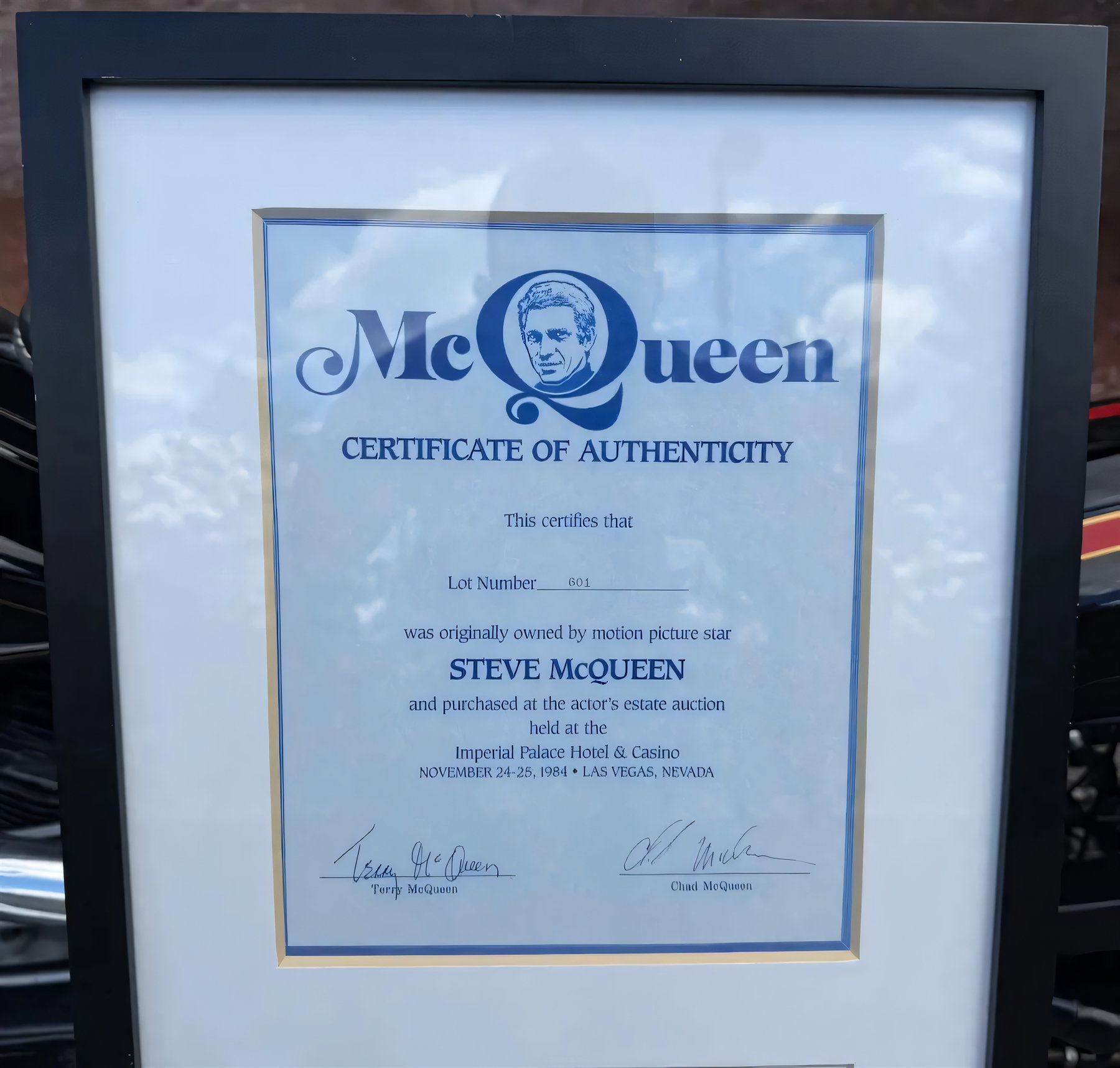
The VL’s provenance is extensively documented, which carries particular weight for a motorcycle from a prominent former owner. The sale included a framed certificate of authenticity from the McQueen estate auction in November 1984 in Las Vegas, signed by the actor’s daughter and son.
Additional items included a framed purchase receipt, a bidder card, a bidder badge and an odometer declaration from the same auction. The collection was rounded out by a display board, a 1931 California license plate and a clean vehicle title from New Jersey. For many buyers, the non-running engine would be a significant drawback, yet the unbroken chain of documentation shifted the balance in this motorcycle’s case in favor of the history.
The VL in the context of the collector market
The sale joins a long history of high-priced McQueen items and shows how strongly the name influences the valuation of classic motorcycles. While a non-running pre-war model without a prominent past would typically sell for considerably less, the connection to McQueen creates its own market logic. For the new owner, the question now is whether to preserve the VL as a historical artifact in its current condition or to give it the restoration that McQueen himself could no longer undertake.
➜ All technical data for this model in our database: Harley-Davidson VL 1931.
Frequently Asked Questions
-
How much was paid for Steve McQueen’s Harley-Davidson VL?
The 1931 Harley-Davidson VL achieved a high bid of approximately 65,800 euros (75,000 US dollars) before fees on Bring a Trailer. It was offered without reserve.
-
Why is the Harley-Davidson VL so valuable despite not running?
The fully documented provenance from Steve McQueen’s private collection shifts the scale. A framed certificate of authenticity from the 1984 McQueen estate auction in Las Vegas, signed by his children, confirms the provenance.
-
What engine does the 1931 Harley-Davidson VL have?
The VL features a 74 cubic inch flathead V-twin with approximately 1,213 cubic centimeters of displacement. In the higher-compression VL version, it produced around 30 hp (22 kW) at 4,000 rpm.
-
Does Steve McQueen’s Harley-Davidson VL run?
No, the engine is currently not running. According to the auction description, the primary chain and some easily replaceable parts are missing. The motorcycle was sold as a non-running project.