- 158 hp (116.2 kW), 130 Nm and Showa suspension with automatic lowering by 30 mm
- Front and rear radar with adaptive cruise control, blind spot assist and emergency brake assist
- Deliveries between December 2026 and March 2027, depending on the market
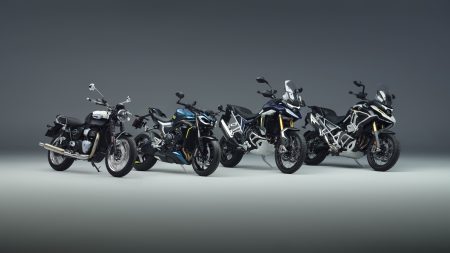
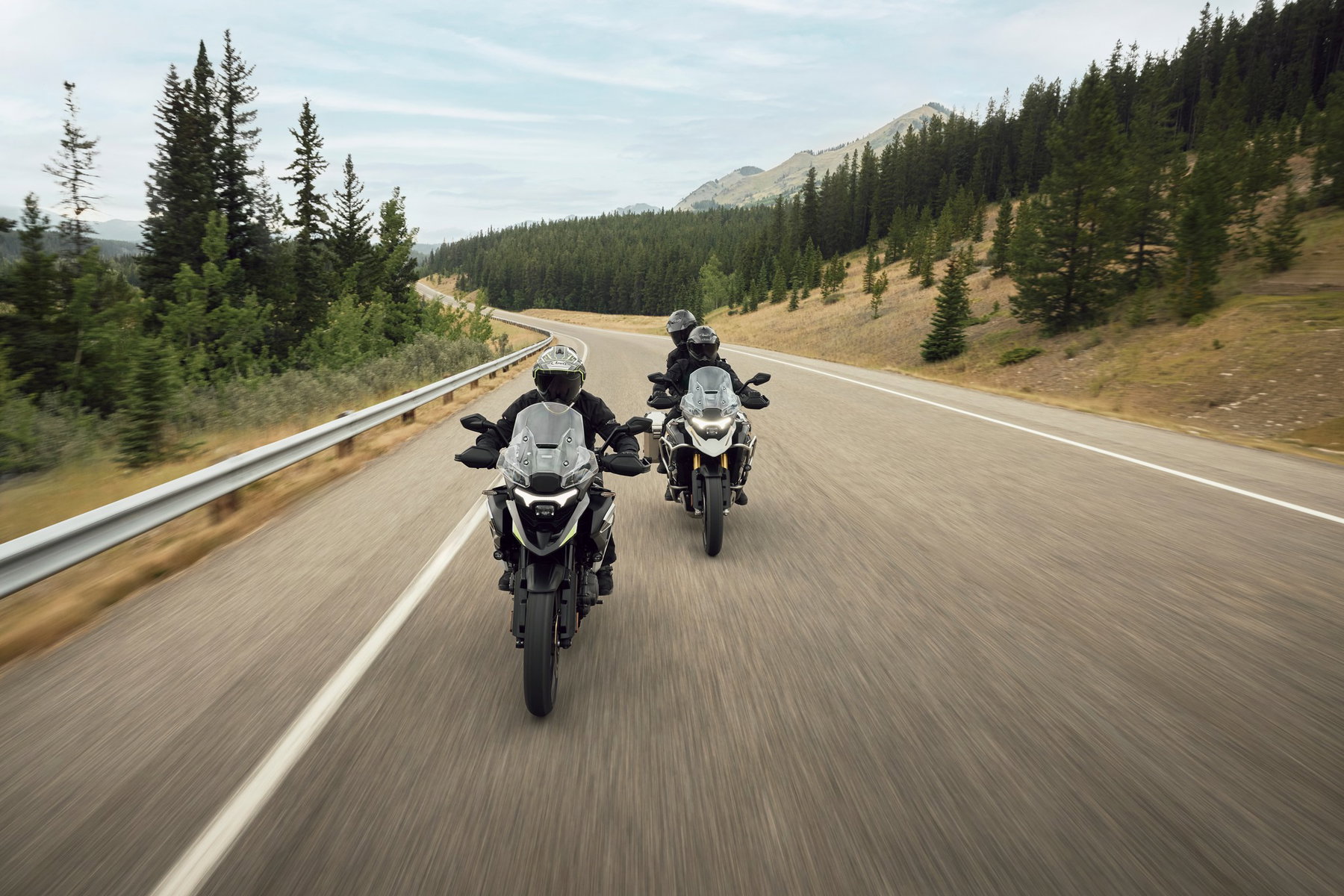
The Triumph Tiger 1200 2027 is more than a facelift. Triumph is dropping the previously clear split between the road-focused GT and the off-road-oriented Rally: the Rally models also lose their 21-inch front wheel and long suspension travel. In return, the entire range gets a Bosch radar package, a new 7-inch display and suspension that lowers the bike when it comes to a stop. The goal is easy to see: the big Tiger should become more accessible, especially for shorter riders and for tours with plenty of luggage. It is part of Triumph’s new models for the 2027 model year.
Why does the Tiger 1200 Rally now have a 19-inch front wheel?
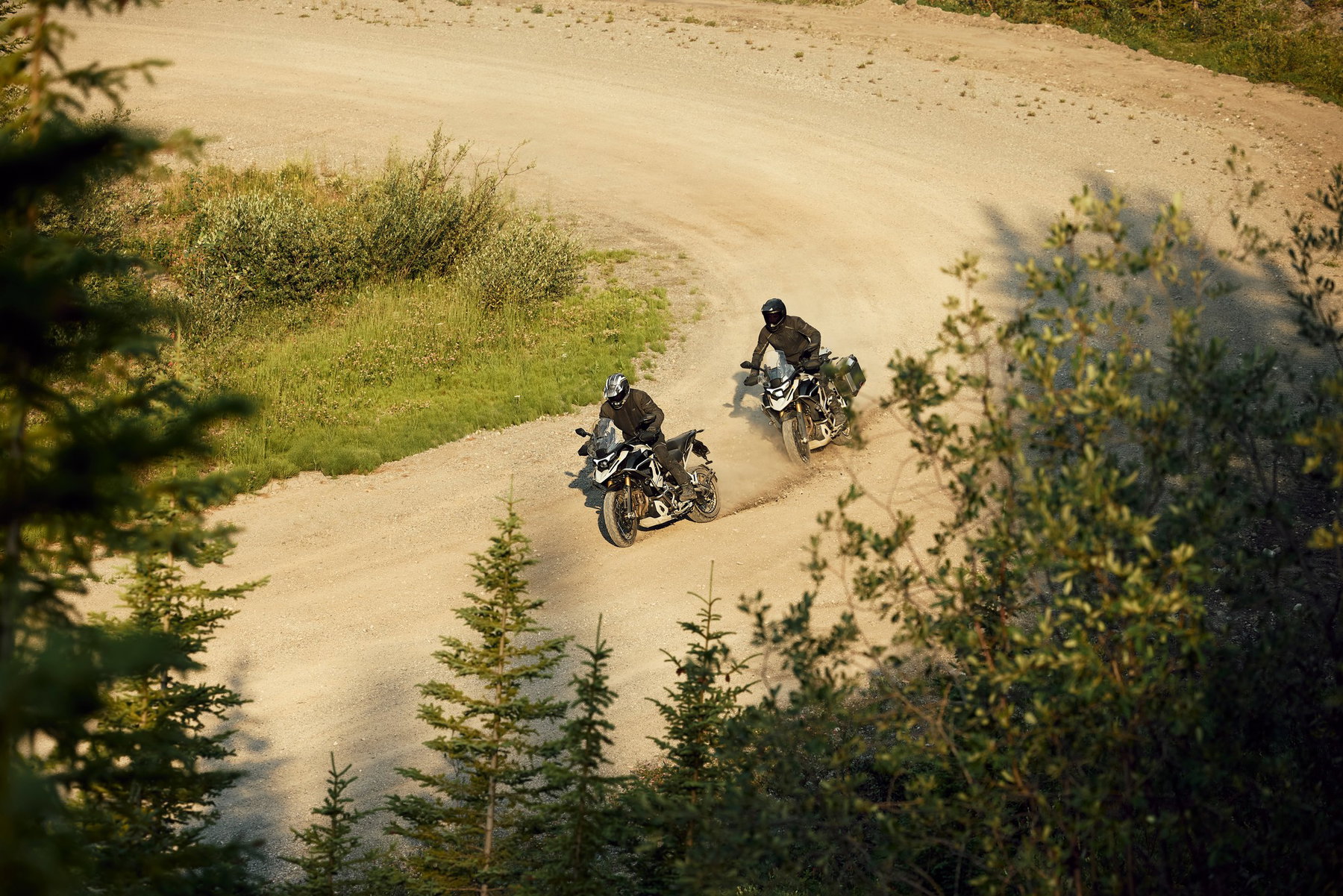
Triumph is switching all four variants to a 19-inch front and 17-inch rear wheel to make the Tiger 1200 more agile on the road. According to the manufacturer, off-road capability is retained.
Until now, the Rally models had a 21-inch front wheel, an 18-inch rear wheel and 220 mm of suspension travel. Now all models have 200 mm of travel front and rear and the same tyre sizes: 120/70 R19 at the front and 170/60 R17 at the rear. The only remaining difference is the wheels. The GT models roll on ten-spoke cast aluminium wheels, the Rally models on cross-spoked wheels that can run tubeless tyres.
The suspension comes from Showa and is called EERA Heightflex. Up front is a 49 mm upside-down fork, at the rear a monoshock. The system is semi-active: it continuously adjusts compression and rebound damping. To do so, it evaluates data from several sensors, including an IMU. This is a measuring unit that records the motorcycle’s movements in six axes. A dedicated button lets the rider choose between three base settings: Firm, Medium and Soft. All other riding settings remain unchanged. Rear preload adjusts automatically, whether riding solo, two-up or fully loaded. New is a hydraulic bump stop at the rear, designed to provide more control in rough terrain.
Triumph changes little on the basic structure. The tubular steel frame with forged aluminium outriggers remains, as do the bolt-on aluminium subframe and the Tri-Link swingarm housing the shaft drive. The braking system is also familiar: two 320 mm discs with Brembo Stylema four-piston calipers and a radial Magura HC1 master cylinder at the front, a 282 mm disc at the rear. Cornering ABS and cornering traction control are standard.
How low is the seat height of the new Tiger 1200?
From the factory, the seat height ranges from 810 to 860 mm. With the optional low seat and automatic lowering, the Tiger 1200 gets down to 790 mm at a standstill.
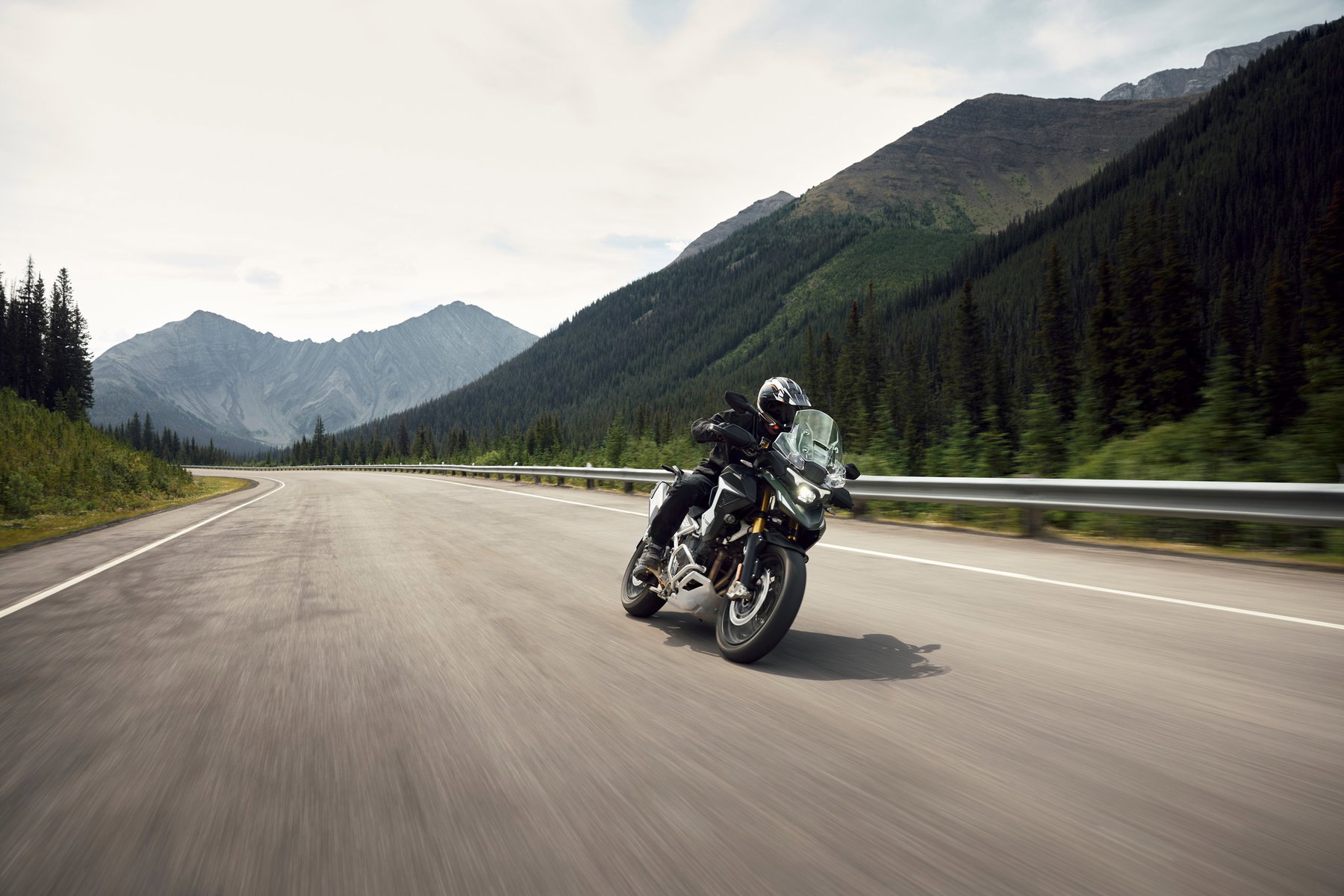
The lowering function is the most striking innovation. Based on speed and braking, the suspension recognises that the motorcycle is about to stop. It then lowers the rear by 30 mm so the rider can get their feet more securely on the ground. This works the same solo, two-up and with luggage. When the Tiger pulls away again, the normal ride height is restored within a few seconds. On the move, the familiar high seating position is retained.
In addition, the seat can be adjusted by 20 mm in two positions. The new low seat brings a further 20 mm. In Germany and Austria it is available as an accessory, in some other markets it is standard.
The same technology helps when putting the bike on its centre stand. When the rider deploys the centre stand, the suspension briefly increases preload and raises the rear. This is meant to reduce the effort required, even with a fully loaded bike. Triumph calls this function Centre Stand Assist.
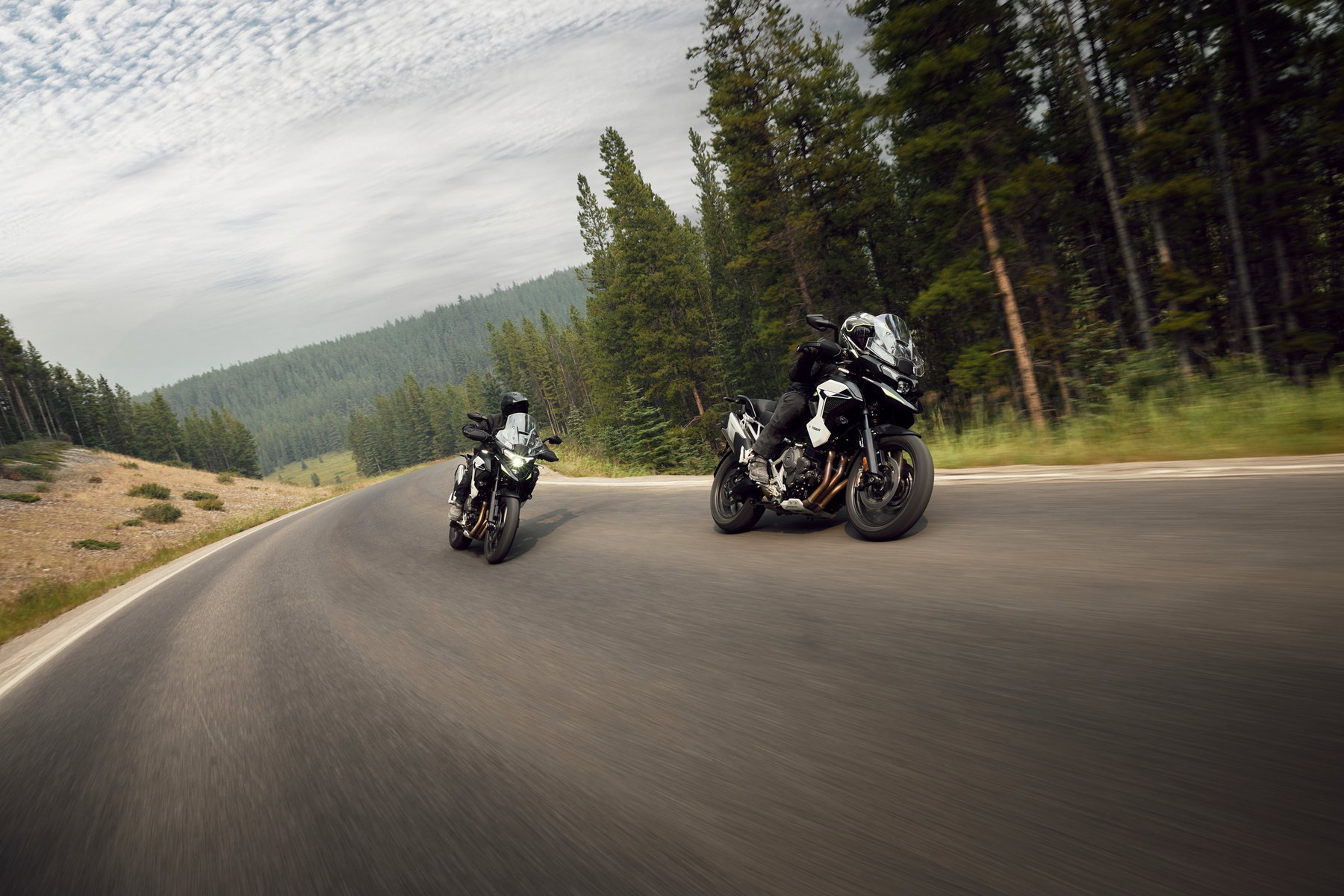
More power, more low-end pull: the revised triple
The 1,160 cc inline triple with T-plane crankshaft now produces 158 hp (116.2 kW) at 9,250 rpm. That is 8 hp more than before. Peak torque of 130 Nm (96 lb-ft) arrives at 6,750 rpm, earlier than on the predecessor.
For the extra power, Triumph redesigned the cylinder head, fitted new pistons and lighter valves and fine-tuned the fuel injection. The exhaust system lets the gases flow more freely. Smoothness was also a focus: the crankshaft and balancer shaft were revised, and new camshaft profiles open the valves more gently.
On the drivetrain, Triumph has shortened or otherwise changed the ratios of the first three gears, as well as the primary and final drive ratios. Together with the stronger low-end torque, the Tiger 1200 should run cleanly down to walking pace of around 6 km/h. That helps when manoeuvring and in traffic jams. The six-speed gearbox and shaft drive run more quietly, gears engage more precisely, and load changes when opening and closing the throttle should be smoother. The latest-generation quickshifter allows clutchless up- and downshifts.
Depending on the model, there are seven or eight riding modes: Road, Rain, Eco, Sport, Off-Road and two freely configurable Rider modes. The Rally models also get Off-Road Pro. The modes change throttle response, ABS, traction control and engine braking. New is that the off-road modes can also be selected on the move.
Triumph quotes a standard fuel consumption of 5.3 litres per 100 km and 120 g of CO2 per kilometre according to Euro 5+. Servicing is due every 16,000 km or every twelve months.
Which assistance systems does the Tiger 1200 with radar have?
The new Tiger 1200 has Bosch radar sensors at the front and rear. They form the basis for adaptive cruise control, emergency brake assist, a collision warning, blind spot assist and other aids that Triumph developed together with Bosch.
Adaptive cruise control maintains the selected speed or the distance to the vehicle ahead. To do so, it uses both throttle and brakes. It reacts differently in Comfort and Dynamic modes. If the rider activates the indicator and the blind spot is clear, an overtaking assistant prepares the manoeuvre. In Comfort mode, the system can reduce speed in long corners. For group rides there is a dedicated assistant: it keeps a suitable distance to the motorcycles ahead, taking their position and speed into account. Anyone who does not want adaptive distance control can use a conventional cruise control mode that holds speed using throttle, engine braking and brakes.
The front radar also works without cruise control. The distance assistant limits acceleration and brakes if necessary when the Tiger gets too close to a vehicle. If the gap shrinks further, a warning appears on the display. This is followed by a noticeable pulse in the rear brake pedal. If the rider brakes hard and the system detects a possible collision, emergency brake assist can increase brake pressure.
The rear radar monitors the blind spot and vehicles approaching quickly from behind. Warnings are given via lights in the mirrors. If someone follows too closely, a separate distance warning kicks in. Riders can decide for themselves which functions support them and how strongly.
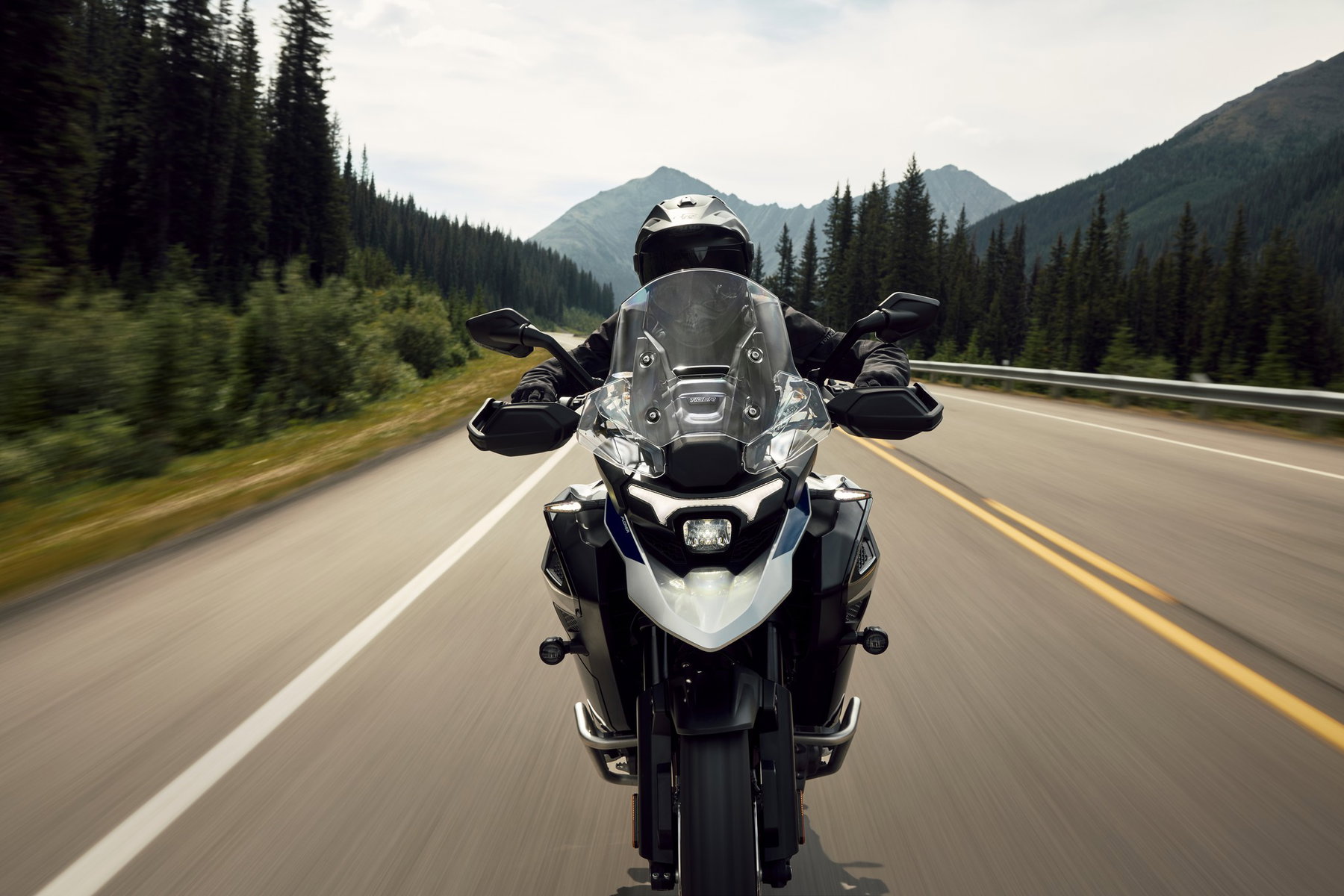
Display, phone compartment and new lighting
The new 7-inch Bosch display is a high-resolution touchscreen with wireless Apple CarPlay and Android Auto. This allows navigation, music and messaging apps to be used. Touch operation only works below 2 km/h. While riding, all inputs are made via the new illuminated switchgear or by voice with Siri or Google Gemini. The display is protected against dust and water to IP6K9K, has anti-glare glass and adjusts its brightness automatically. According to Triumph, the brand is the first manufacturer to have specifically optimised CarPlay and Android Auto for use on a motorcycle.
At the top of the tank sits a waterproof compartment for the smartphone. A USB-C port charges at up to 3 A or 15 W. An automatic fan and air ducts are designed to prevent the phone from overheating.
Visually, the Tiger 1200 remains a typical large adventure tourer, but looks more angular. The tank, radiator shrouds, beak and windscreen have been reshaped. Up front sits a compact LED projector headlight with cornering lights: at 15 and 30 degrees of lean, additional LEDs switch on one after the other and illuminate the inside of the corner. An electric motor adjusts the headlight range when the ride height changes. A new daytime running light is designed to preserve the Tiger’s familiar light signature. At the rear, two LED units handle the indicators and tail light; there is no longer a central tail light.
For more comfort on long distances, Triumph has revised the ergonomics. Rider and pillion seats have 10 mm thicker padding. Heated seats front and rear as well as three-stage heated grips are standard on all models.
What sets the four Tiger 1200 variants apart?
The variants differ in wheels, tank size and protective equipment. Technology and electronics are largely identical.
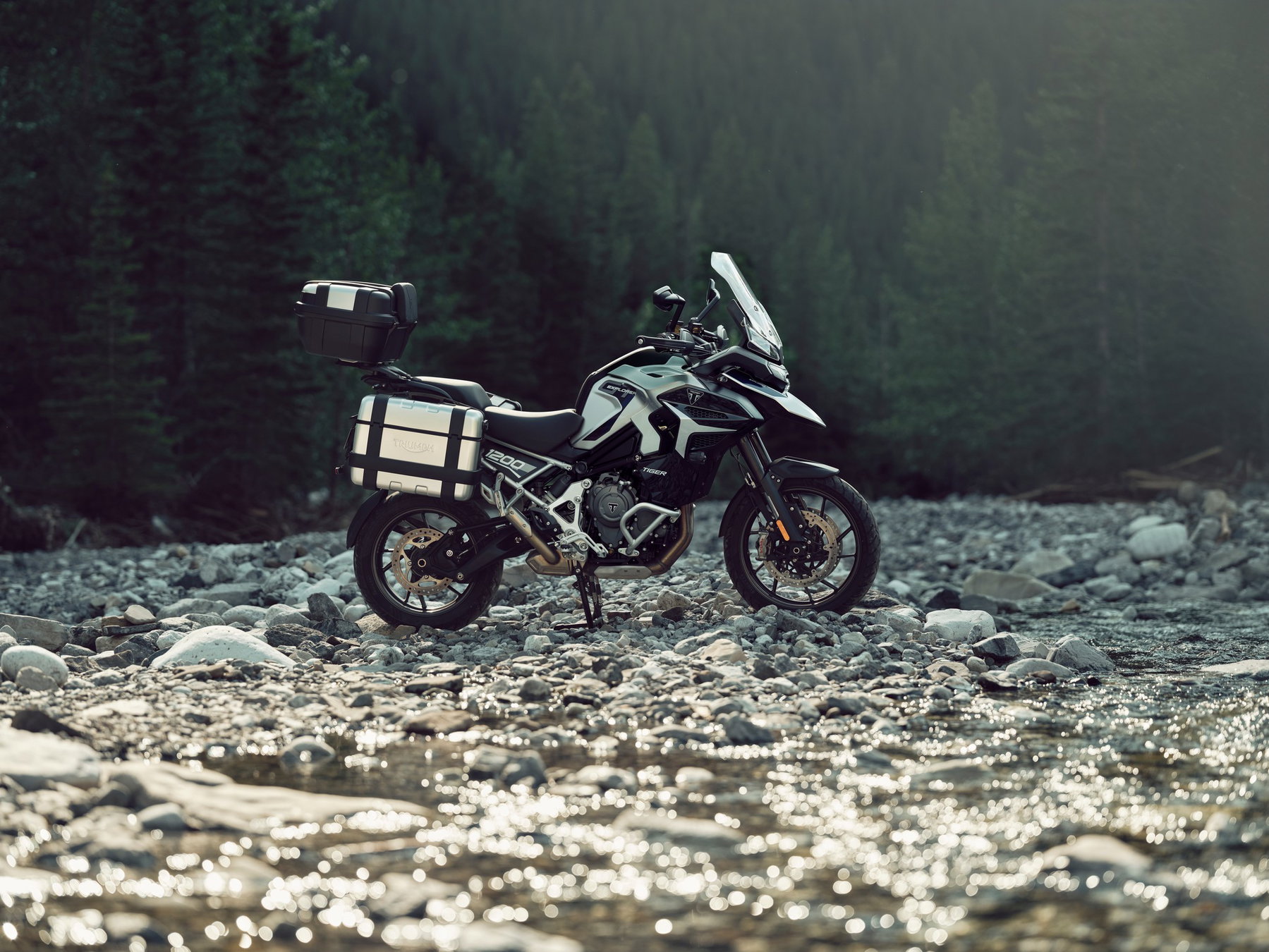
The Pro models have a 20-litre tank, the Explorer models a 30-litre tank. The Explorers also get tyre pressure monitoring, lower crash bars and a handlebar that is 10 mm higher and 10 mm wider. In addition to the spoked wheels, the Rally models come with the Off-Road Pro mode, an engine guard and a folding, adjustable brake pedal. Only the Rally Explorer also has upper crash bars.
Ready to ride, the variants weigh between 250 and 268 kg:
- GT Pro: 250 kg (551 lbs), Sapphire Black or Aluminium Silver/Pacific Blue
- Rally Pro: 255 kg (562 lbs), Matt Khaki Green or Ash Grey
- GT Explorer: 260 kg (573 lbs), Aluminium Silver/Pacific Blue or Granite
- Rally Explorer: 268 kg (591 lbs), Ash Grey/Sapphire Black or Matt Khaki Green
The overall length is 2,258 mm, the wheelbase 1,567 mm. The rake is 24.3 degrees, the trail 115 mm.
How much does the new Tiger 1200 cost and when is it coming?
In Germany, the Tiger 1200 costs from 21,395 euros (approx. 23,950 US dollars) for the GT Pro and from 23,995 euros (approx. 26,860 US dollars) for the Rally Explorer. It can be ordered now, with deliveries starting between December 2026 and March 2027, depending on the market.
Prices in Germany, plus the dealer’s delivery charges:
- GT Pro: from 21,395 euros (approx. 23,950 US dollars)
- Rally Pro: from 22,295 euros (approx. 24,955 US dollars)
- GT Explorer: from 22,995 euros (approx. 25,740 US dollars)
- Rally Explorer: from 23,995 euros (approx. 26,860 US dollars)
In Austria, prices including on-the-road costs and the NoVA registration tax range from 24,595 euros (approx. 27,530 US dollars) for the GT Pro to 27,295 euros (approx. 30,550 US dollars) for the Rally Explorer. In Italy, the GT Pro starts at 22,795 euros (approx. 25,515 US dollars), in Spain at 23,595 euros (approx. 26,410 US dollars). The Rally Explorer costs from 25,395 euros (approx. 28,425 US dollars) and from 26,195 euros (approx. 29,320 US dollars) respectively.
The first motorcycles will reach dealers in the UK, Switzerland and Italy in December 2026. Spain follows in January 2027, Poland in February. In Germany and Austria, deliveries begin in March 2027. There, a four-year manufacturer warranty with unlimited mileage applies.
New accessories are available at launch. The Evo luggage system developed together with GIVI gets a 58-litre top box that holds two helmets. Previously, only a 42-litre version was available. Both cases are made of aluminium, available in silver or black anodised and, on request, with a backrest pad for the pillion. The matching panniers can be fitted with waterproof inner bags. Alternatively, Triumph offers the Trekker luggage range.
Steve Sargent, Chief Product Officer at Triumph, speaks of a big step for the model. Customers want cutting-edge technology that is easy to use and does not get in the way. That is exactly what the new Tiger is designed for, he says. According to Sargent, Triumph is also the first manufacturer to have fully implemented Showa’s EERA Heightflex technology.
Frequently Asked Questions
-
How much does the Triumph Tiger 1200 2027 cost?
In Germany, the GT Pro starts at 21,395 euros (approx. 23,950 US dollars). The most expensive variant, the Rally Explorer, costs from 23,995 euros (approx. 26,860 US dollars). The dealer’s delivery charges come on top.
-
How much power does the new Tiger 1200 have?
The 1,160 cc triple produces 158 hp (116.2 kW) at 9,250 rpm. That is 8 hp more than its predecessor. Peak torque is 130 Nm at 6,750 rpm.
-
Does the Tiger 1200 Rally still have a 21-inch front wheel?
No. All four variants now run a 19-inch front and 17-inch rear wheel with 200 mm of suspension travel. The Rally models differ from the GT models mainly through spoked wheels, the Off-Road Pro mode and the engine guard.
-
How does the automatic lowering of the Tiger 1200 work?
Based on speed and braking, the Showa suspension recognises that the motorcycle is stopping and lowers the rear by 30 mm. When pulling away, it restores the normal ride height within a few seconds. With the low accessory seat, the seat height at a standstill is then 790 mm.
-
When will the new Tiger 1200 be delivered in Germany?
In Germany and Austria, deliveries begin in March 2027. The motorcycle can already be ordered now. In some other markets such as the UK, Switzerland and Italy, the first bikes arrive as early as December 2026.