- BMW Motorrad announced a stake in Venna on 29 October 2026, the amount and size of the stake remain undisclosed.
- Venna is the former Slovenian start-up Flux Performance, known for the 86 hp electric motocross bike Primo.
- The first motorcycle of the new generation is to be unveiled in January 2027.
BMW Motorrad is venturing into electric motorcycles again, but this time not on the road but off-road, and not with a model of its own. The Munich-based company has invested in Venna, a start-up that focuses on high-performance electric off-road motorcycles. One name that is crucial for putting this into context does not appear in the official announcement at all: Venna emerged from Flux Performance, a company from Slovenia that already caught attention in 2022 with a particularly powerful electric motocross bike. To this day there has been no production model. This is exactly where BMW’s experience is now supposed to help.
What is known about BMW’s stake in Venna?
BMW Motorrad is investing in Venna to gain a foothold in the market for electric off-road motorcycles and to reach new, above all younger, customers. Neither company has revealed how much money is involved or how large BMW’s stake is.
What is clear is how the cooperation is basically meant to work. Venna remains an independent company and is to keep its own pace of development. In return, the start-up can draw on BMW’s know-how in development, quality, setting up series production and the global business. It is open in which areas the two partners will actually work together. BMW only speaks of selected fields.
BMW cites a change among customers as the reason. Younger riders in particular increasingly see the motorcycle less as a means of transport and more as a sporty leisure device. With the stake, the manufacturer wants to gain early experience in a segment in which it sees strong growth potential. BMW Motorrad boss Markus Flasch says: “The partnership opens up prospects for us in a new segment and helps us to inspire new target groups with the fascination of motorcycling.”
Venna CEO Marko Ukota calls the Munich company’s entry an “enormous confirmation of our passion and our technological approach”. His goal is to build high-performance electric motorcycles for all riding categories. With BMW on board, both the technology and the path to series production are expected to progress much faster.
To put the scale into perspective: the BMW Group sold more than 202,500 motorcycles worldwide in 2025. Venna, on the other hand, has not yet delivered a single production motorcycle.
Who is behind the start-up Venna?
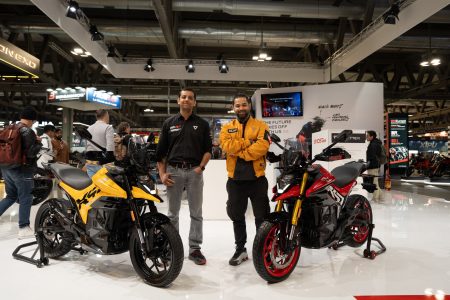
Venna is the new form of Flux Performance, a manufacturer of electric off-road motorcycles founded in Slovenia in 2021. The connection is clear: the old Flux website now redirects to Venna, the US trademark application for the name Venna comes from the Flux Performance Group, and Flux founder Marko Ukota is still at the helm.
From supermoto champion to electric developer
Ukota comes from racing. He was supermoto champion in Slovenia and Italy and, after around 15 years of racing experience, also works as a designer. He founded Flux together with two aerospace engineers, Jure Tomažič and Črt Gorup. Ukota already had the idea of an electric supermoto in 2009. Back then, the project failed because of the batteries, which were not yet good enough for his requirements.
Ukota has repeatedly explained his reasons for electric drive off-road in similar terms. He sees noise as the biggest problem of the sport. As an example he cites Belgium, where there are said to have been around 60 motocross tracks in the 1970s and only six today. On top of that come the costs and effort of maintaining combustion engines, which take time and money away from the actual riding.
The company has since reorganised itself. Its headquarters are said to have moved from Slovenia to Los Angeles. Flux has brought experienced people from the electric motorcycle industry into the team: Alta Motors founder Marc Fenigstein, Cake co-founder Karl Ytterborn and, in June 2025, César Ferreira, previously lead vehicle engineer and for a time chief technology officer at Stark Future.
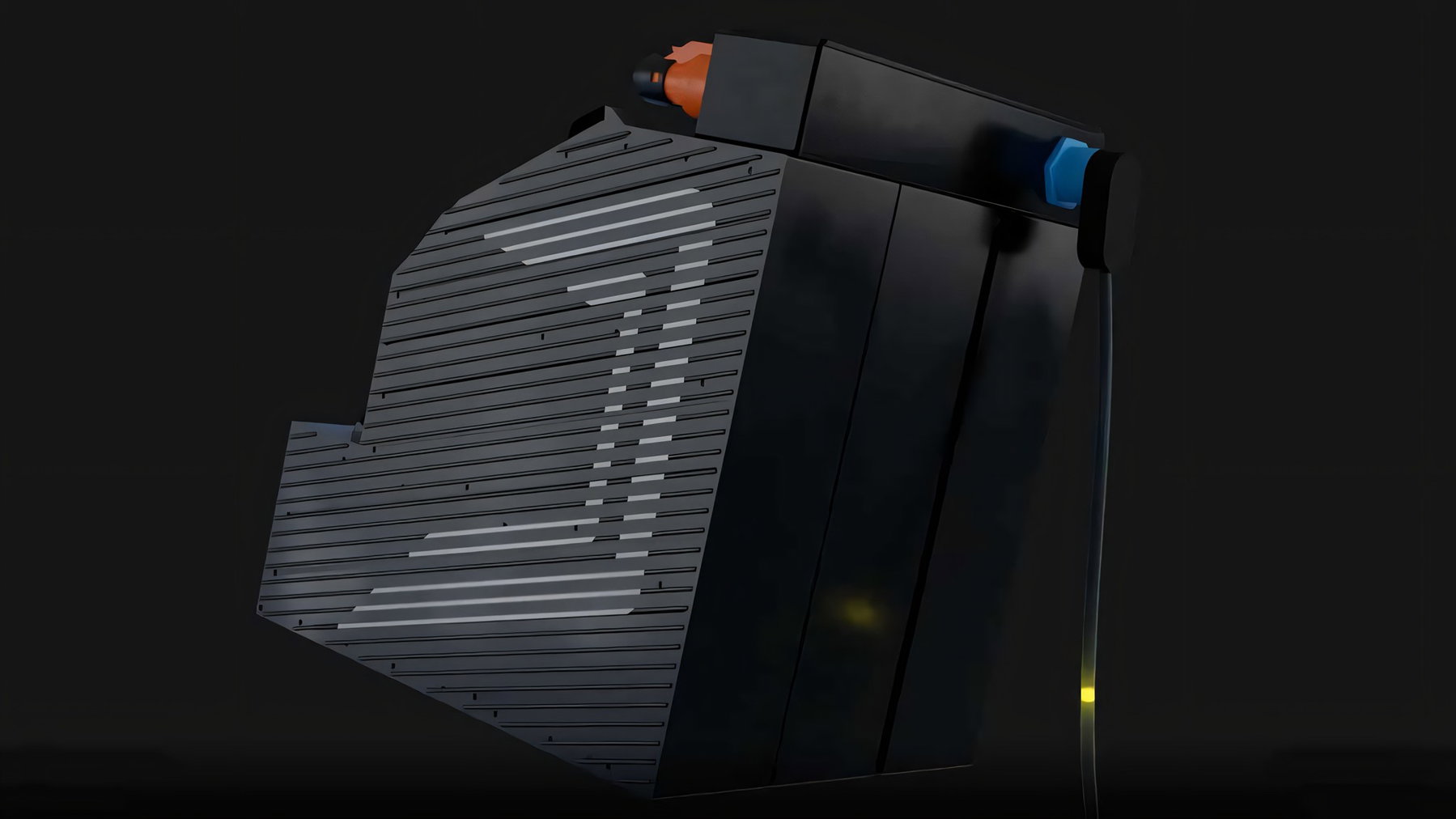
What could the Flux Primo prototype do?
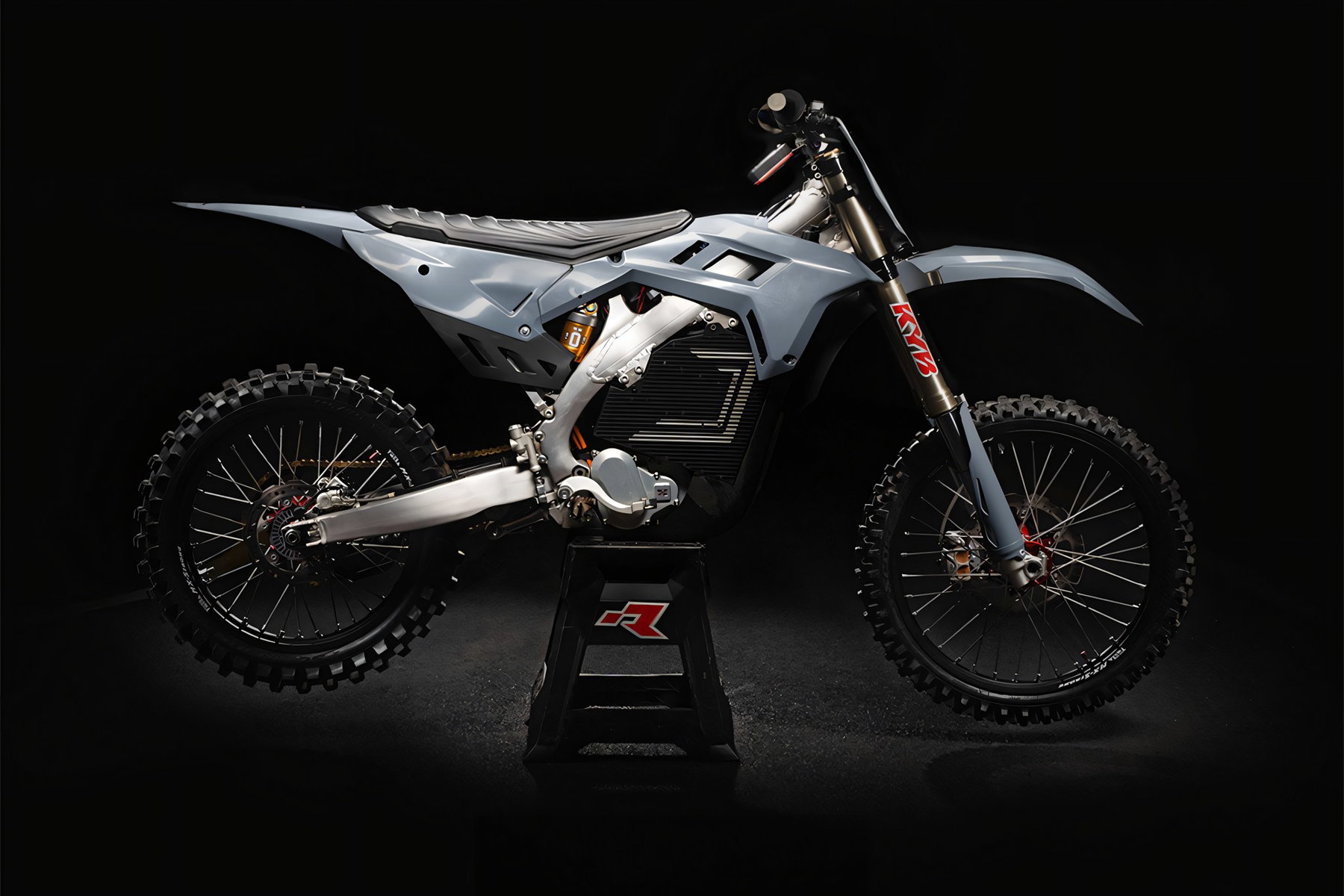
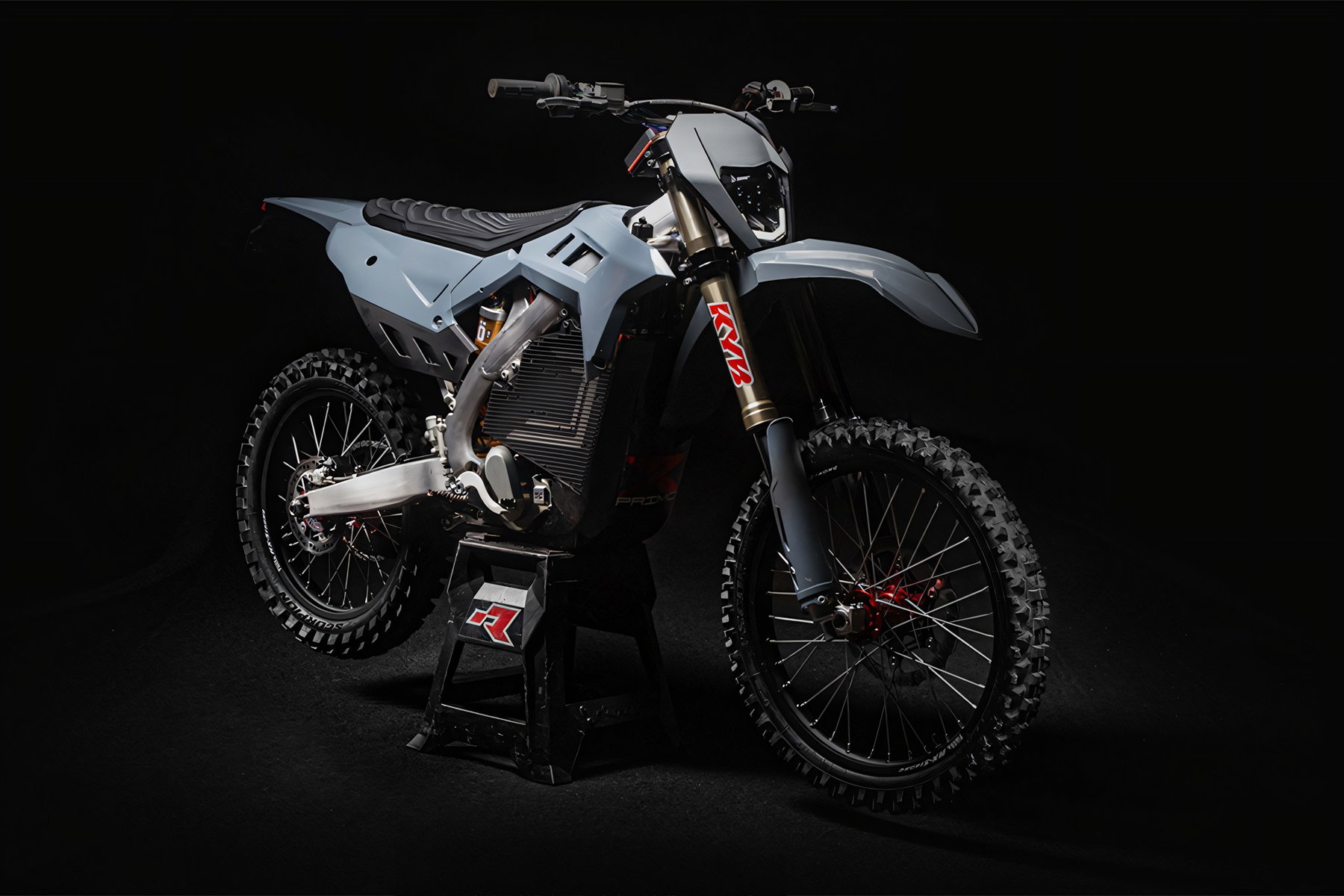
The Flux Primo was intended as an electric alternative to 450 cc motocross bikes with combustion engines and, with a peak output of 86 hp (63 kW), was meant to offer more than the competition. At its heart was a swappable 7 kWh, 450-volt battery.
The battery can be pulled out of the motorcycle from the right-hand side and replaced with a charged one. Flux once quoted around one minute for this. The water-cooled electric motor was supposed to deliver 200 Nm (around 148 lb-ft) at the output shaft, and according to the manufacturer 750 Nm (around 553 lb-ft) reached the rear wheel. The suspension consisted of a 48 mm KYB fork and an Öhlins TTX shock.
Flux placed great emphasis on the software. Via smartphone, the power can be adjusted from very gentle to full force, with six different parameters and individual riding profiles. A virtual clutch imitates the slipping of a real clutch, and a separate lever controls regeneration, i.e. braking with the motor, during which electricity flows back into the battery. There was also a reverse gear and PIN-based theft protection. Sensors for acceleration, lean angle, wheel speeds and GPS were meant to form the basis for later assistance functions.
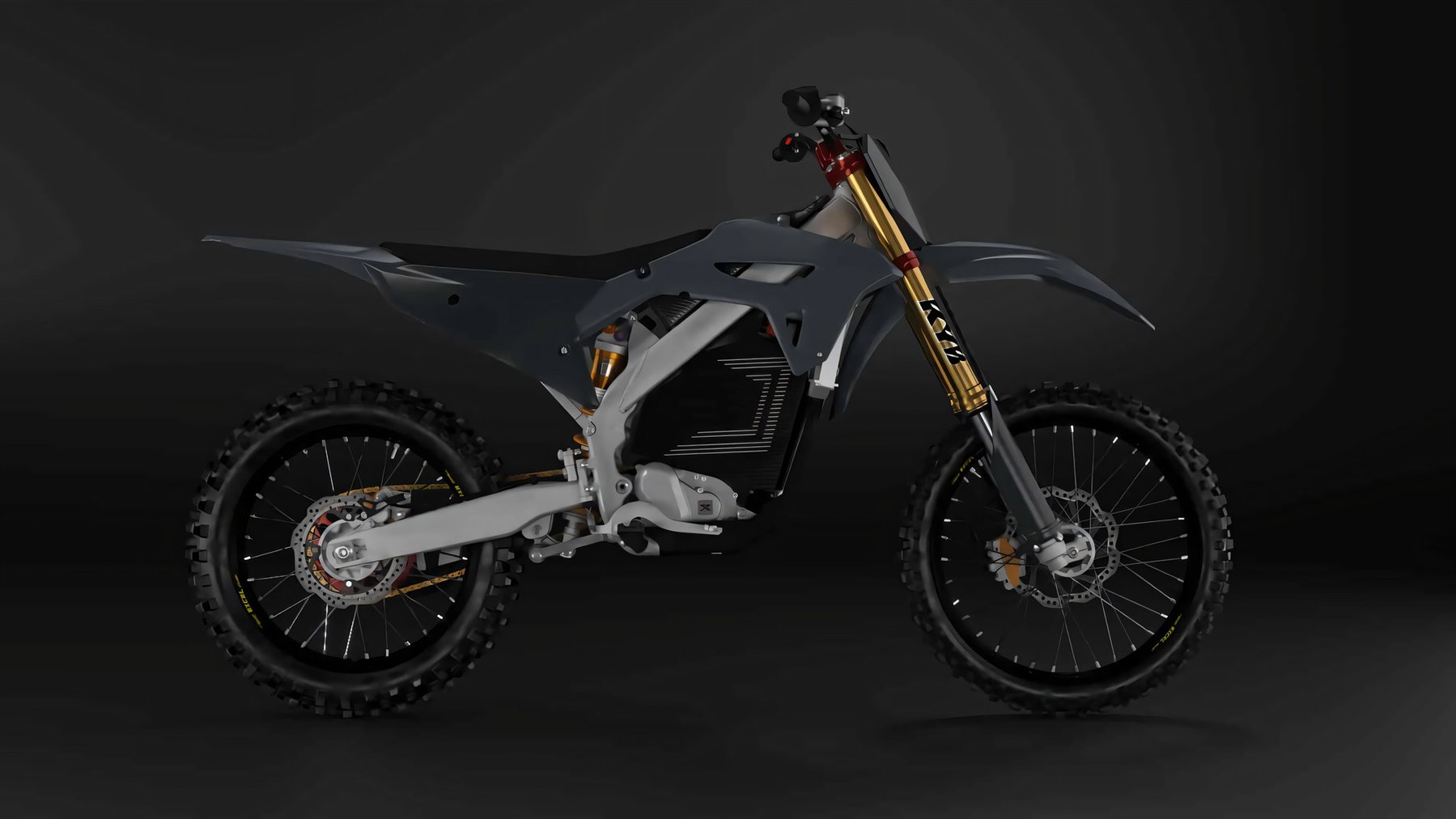
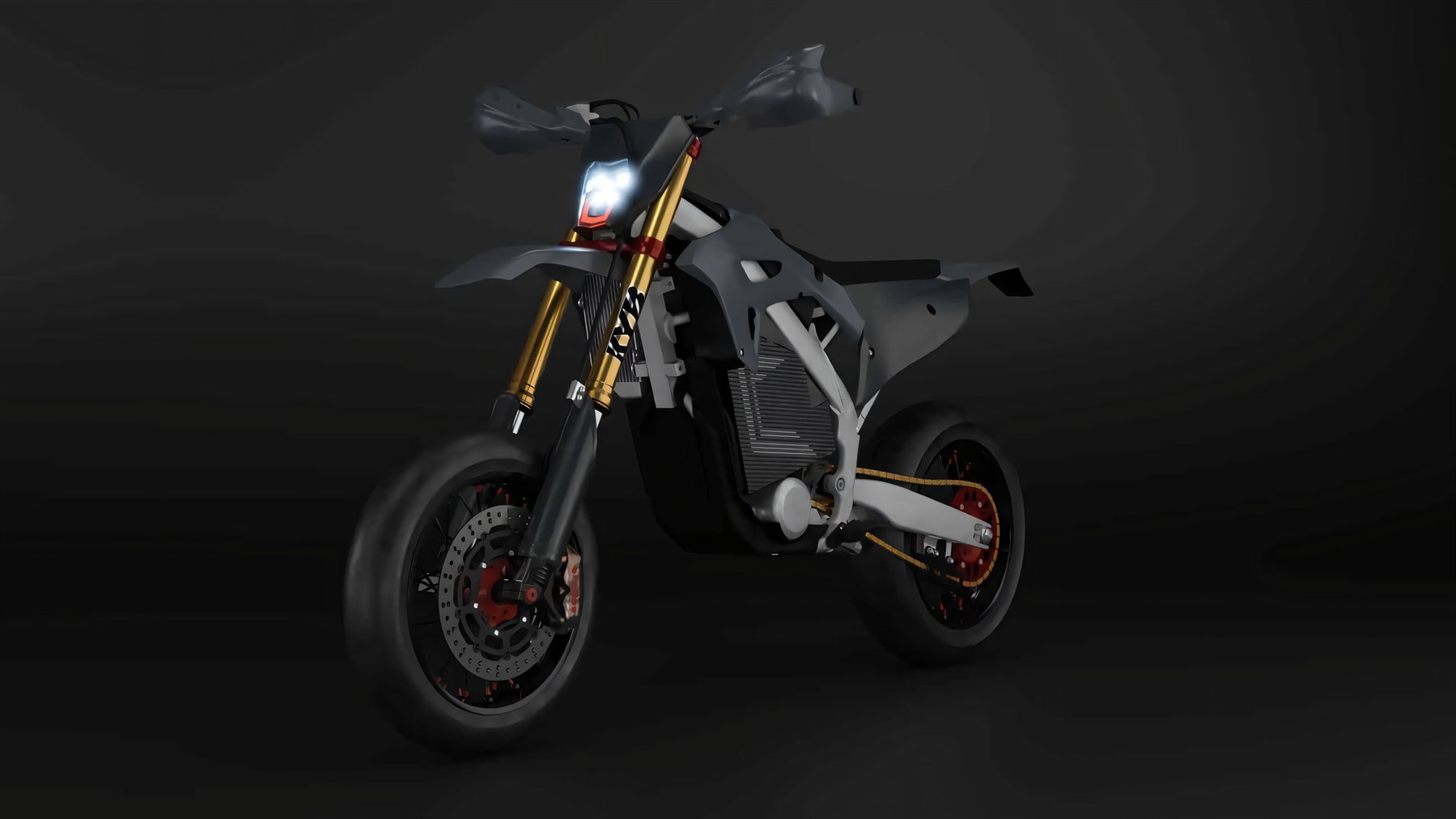
Three versions were planned: a pure motocross bike for the track as well as a street-legal enduro and supermoto.
Why is the Primo still not available to buy?
Series production of the Primo has been postponed again and again. Most recently it was planned for 2026, now a first motorcycle of the new generation is to be presented under the Venna name in January 2027.
Flux’s timelines were ambitious from the start. In 2022 there was talk of the first production motorcycles by 2024. In 2023, Ukota himself described the Primo on display as a prototype and development tool, with the production model to follow at the end of 2024 and deliveries in 2025. At the time, Flux accepted reservations for 12,000 euros (around 13,470 US dollars), and the regular price was to be 13,000 euros (around 14,590 US dollars). Both conversions are based on today’s exchange rate. In 2025, the company reported that the first batch had sold out at this introductory price.
It is not known whether the planned new model will be based on the Primo or will be a completely new model. The only thing that is clear is where things have been stuck so far: the step from a working prototype to a motorcycle that can be built, delivered and supported in volume. This is exactly the experience BMW brings to the table. If the January date holds, Venna will be one of the new arrivals of the 2027 motorcycle year.
Why is BMW now focusing on off-road for electric motorcycles?
On the road, BMW has put its plans for electric motorcycles on hold for the time being, but off-road the manufacturer sees a market with great potential. Electric drive fits better there than on country roads.
BMW was an early player in scooters. The C evolution arrived in 2014, followed later by the CE 04 and the smaller CE 02. With the Vision DC Roadster study, BMW also showed an electric motorcycle in 2019, but there was never a production version. Instead, the manufacturer is sticking with the combustion engine for its motorcycles.
Off-road, several factors speak in favour of electric drive. Rides are usually short, the motorcycles are brought to the track by trailer or van, and range therefore plays a smaller role. At the same time, noise regulations are becoming stricter, and an electric motor needs hardly any maintenance. For a large manufacturer, a stake is also a manageable risk. It secures technology and experts without having to convert its own factories for a segment that has so far only reached small volumes.
The excursion into off-road is not entirely new for BMW. In 2008, BMW launched the G 450 X, a single-cylinder sports enduro that stood out with unusual technology: the clutch sat directly on the crankshaft, and the swingarm pivoted around the same axis as the gearbox output shaft so that the chain tension stayed the same as the suspension compressed. Husqvarna also belonged to BMW for a few years. When it sold the brand to Pierer Industrie in 2013, BMW named urban mobility and electromobility as its new priorities.
What does the competition look like for electric off-road motorcycles?
With Venna, BMW is entering a segment in which Stark Future sets the tone. The maker of the Varg is so far the only brand that gets an electric off-road motorcycle to customers in significant numbers.
Stark has expanded its Varg range from motocross to enduro and supermoto. KTM has been gaining experience with the Freeride E since 2014 and is also offering it for 2027. The big Japanese manufacturers are testing too: Honda already raced its electric motocross bike CR Electric Proto in the Japanese Motocross Championship in 2023 and in the FIM E-Xplorer World Cup in 2024. Yamaha is developing an electric motocross bike based on the YZ450F with the YE-01 Racing Concept.
It is remarkable that several major brands are taking the same route as BMW. Yamaha took a stake in the French specialist Electric Motion in 2024, and LiveWire, Harley-Davidson’s electric brand, has also gained access to electric off-road motorcycles through a start-up. Instead of developing everything themselves, the manufacturers are securing the know-how of young specialists.
What is still open in the partnership?
A lot. There are no technical specifications, no price and no delivery date for a Venna motorcycle, and the size of the stake also remains secret. BMW has not announced an electric off-road motorcycle with a BMW logo or a factory racing team in connection with Venna.
It is also unclear in which areas the cooperation will actually take place and how much BMW technology will ultimately end up in the Venna models. The next stage is therefore clearly defined: Venna has to show that the promising prototype can become a real production motorcycle, and where it fits in compared with Stark, KTM and the upcoming models from the Japanese manufacturers.
Frequently Asked Questions
-
What is Venna?
Venna is a start-up that develops high-performance electric motorcycles with a focus on off-road riding. It emerged from the Slovenian company Flux Performance and is led by founder Marko Ukota. BMW Motorrad took a stake in Venna in October 2026.
-
How much is BMW investing in Venna?
That is not known. Neither BMW nor Venna has published the amount of the investment or the size of BMW’s stake. The only thing that is certain is that Venna will remain independent.
-
What does Venna have to do with Flux?
Venna is the reorganised form of Flux Performance. The former Flux website redirects to Venna, the brand name was registered by the Flux Performance Group, and Flux founder Marko Ukota is still in charge.
-
When will the first Venna motorcycle arrive?
A first motorcycle of the new generation is to be presented in January 2027. There are no technical specifications, price or delivery date yet. The predecessor prototype Flux Primo had 86 hp (63 kW) and a swappable 7 kWh battery.