- Date: 2 November in Milan, one day before EICMA opens its doors
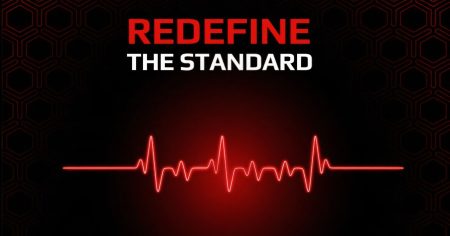
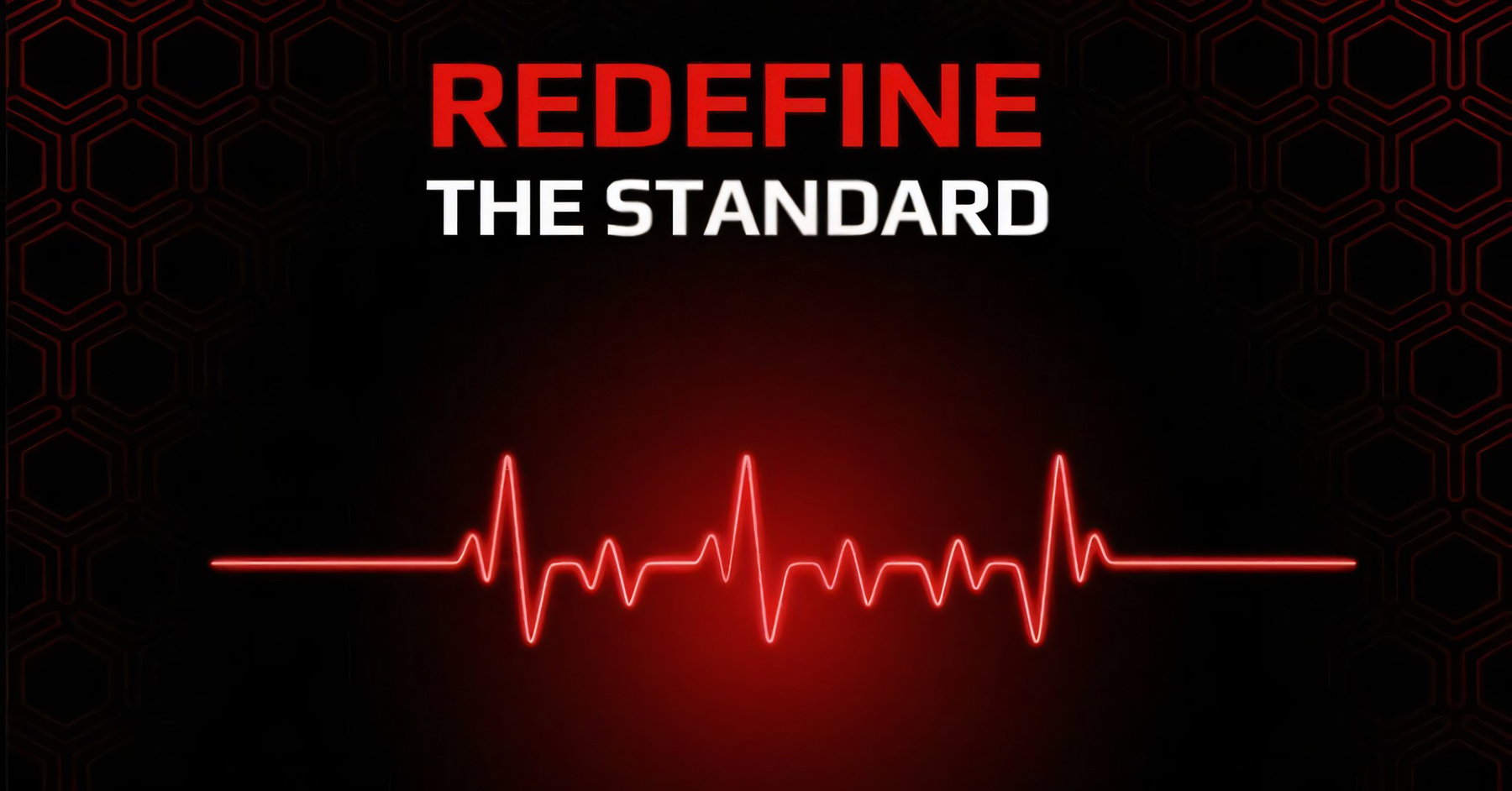
- The teaser is titled „Redefine the Standard“ and shows an ECG trace with three peaks
- The gaps between the peaks are not equal, which could point to an unusual firing order
Building anticipation ahead of the big shows is part of the business. Preparations for EICMA in Milan are already in full swing this year, spy shots are circulating from around BMW, and now Yamaha has sent out a message of its own. It is short, and it names no model, no displacement and no segment. That is precisely why it has been picked apart for days.
What exactly has Yamaha announced for EICMA?
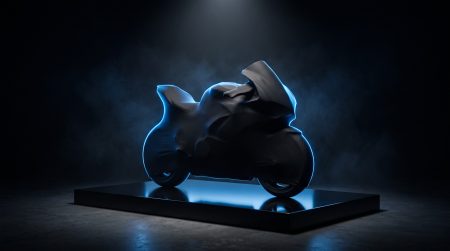
Yamaha has sent out a save-the-date notice announcing a presentation on 2 November in Milan. That is precisely the day before EICMA opens its doors in the northern Italian city.
The notice itself stays vague. Above a graphic that looks like the printout of a heart monitor sits the title „Redefine the Standard“. Below it follows a terse three-liner: „The industry has followed the same rhythm for long enough. We’re ready to challenge it. Something new is coming.“
That is all it says. Given that roughly two and a half months still remain before the show, this is an unusually early moment for a hint of this kind.
Why do the three peaks point to a three-cylinder engine?
Two details of the notice stand out: the ECG graphic and the word rhythm. When motorcycle engineers talk about the rhythm of an engine, they usually mean the firing order, in other words the sequence and the intervals at which the individual cylinders fire.
The graphic shows three peaks. The obvious reading is therefore that a three-cylinder engine is meant. The second point is at least as interesting: the gaps between the three peaks are visibly different, with a larger gap opening up between the second and the third. Anyone who packs a message into an image rarely does so by accident.
How is Yamaha’s CP3 engine built?
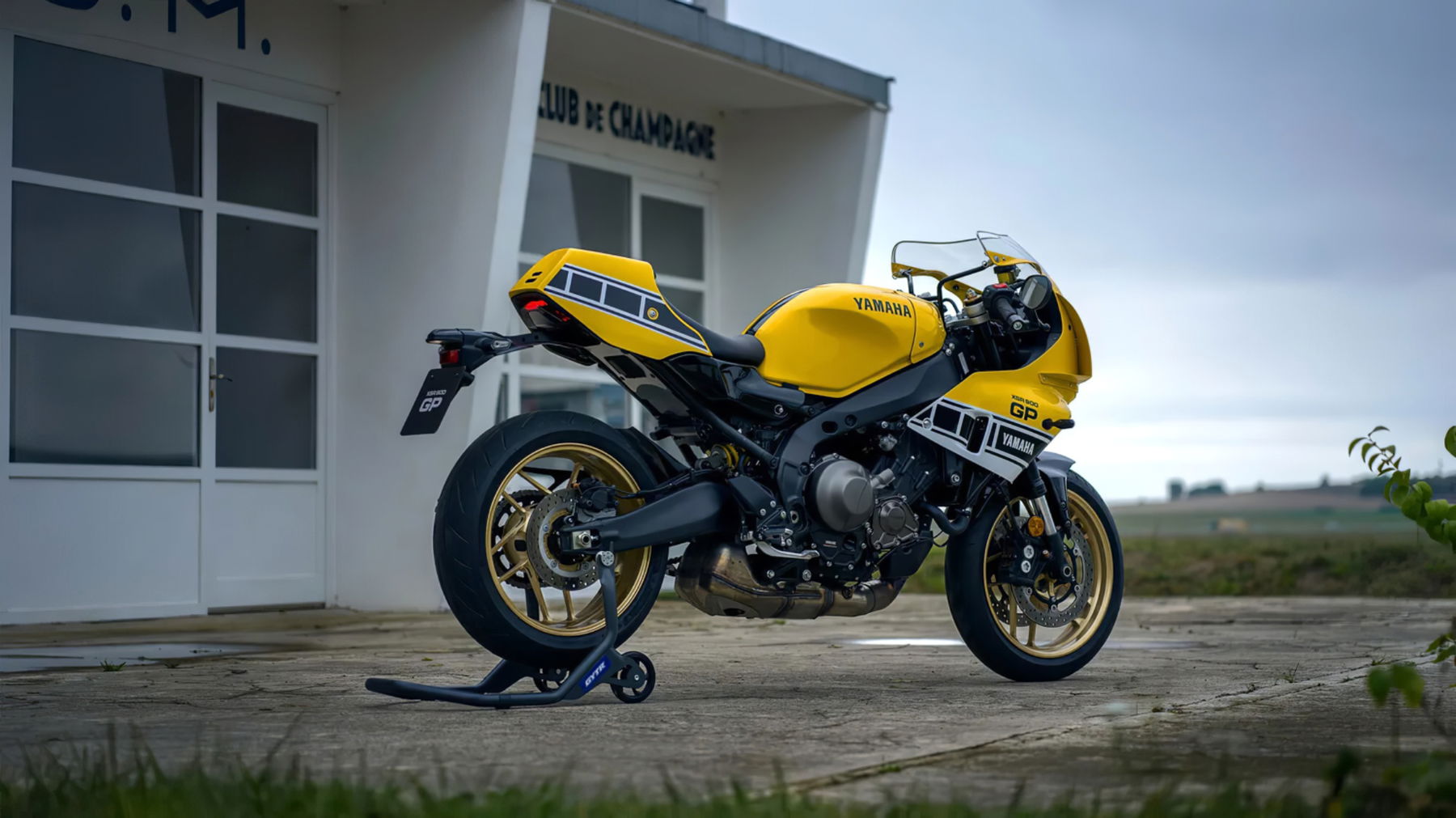
Yamaha has long had a three-cylinder engine in its range in the shape of the CP3. It works with a crankshaft offset by 120 degrees and therefore with a very even firing order of 240-240-240 degrees.
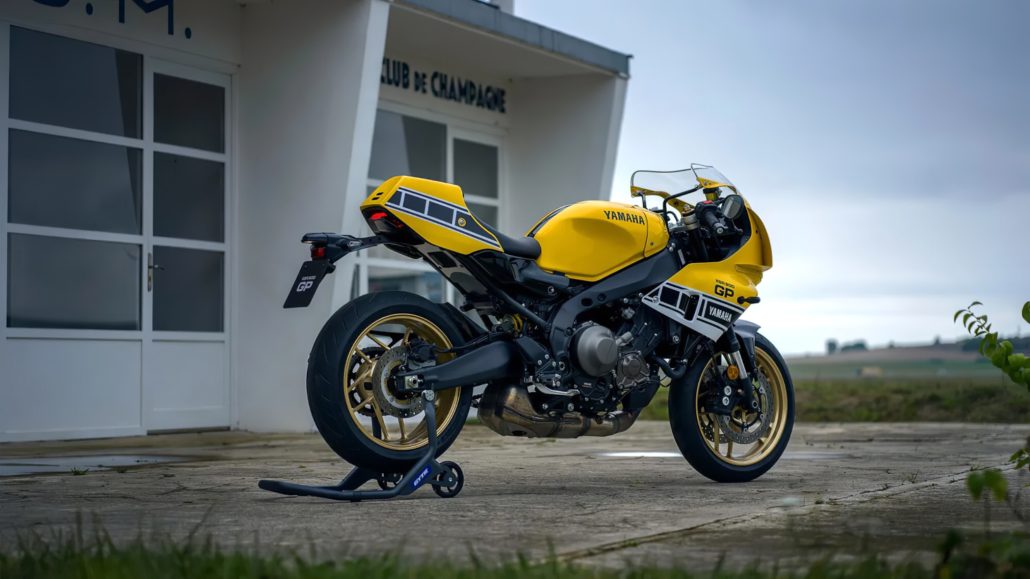
The CP3 was introduced in 2014 in the MT-09, back then still with 847 cubic centimetres. Displacement later grew to 890 cubic centimetres and the engine found its way into the Tracer 9, the XSR900 and the YZF-R9. The even beat of this engine does not, however, match what the teaser graphic shows. That suggests Yamaha is not simply dropping the existing engine into a new chassis.
What does Triumph have to do with it?
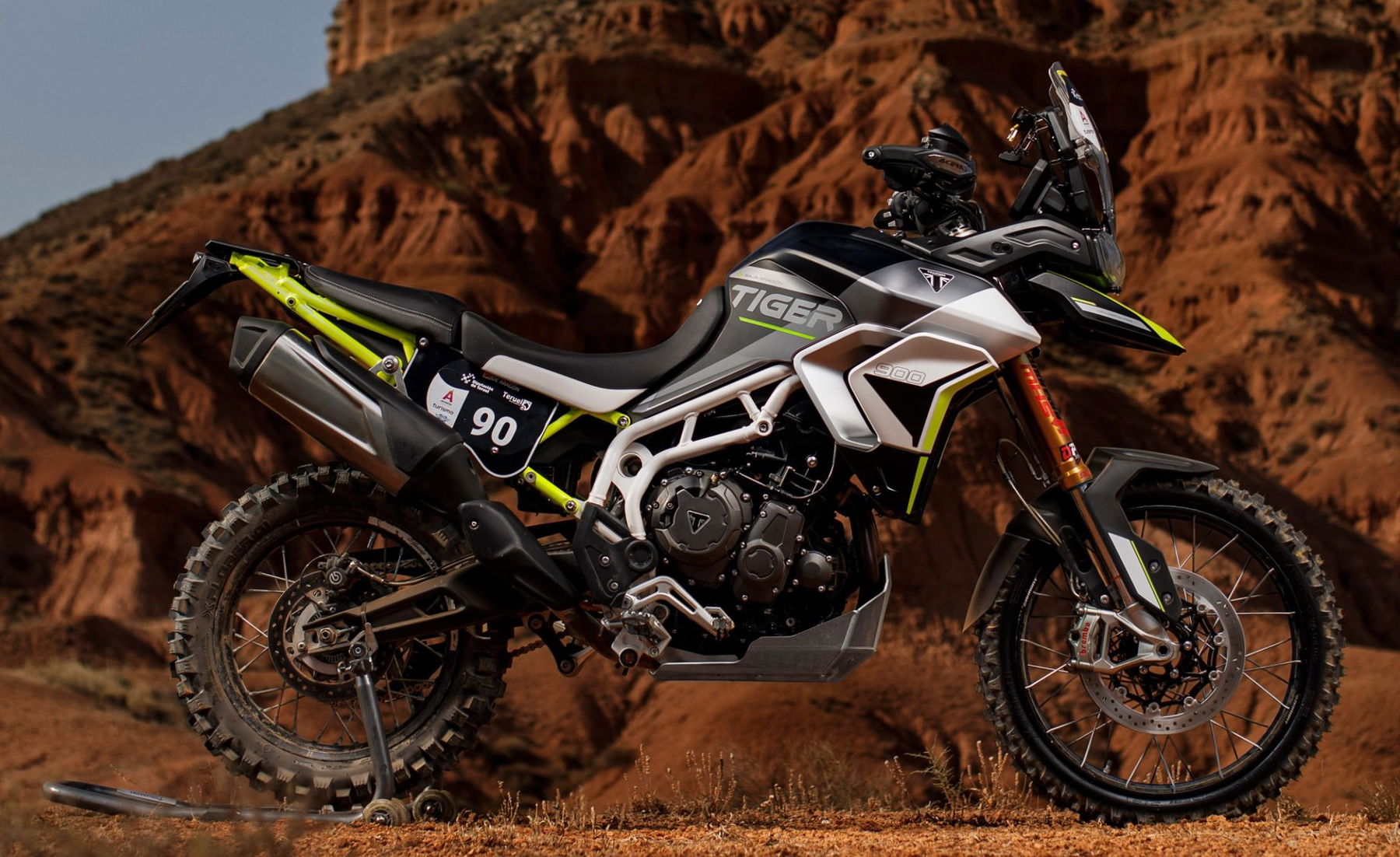
The uneven gaps in the graphic resemble what Triumph does with its T-Plane engine. That triple is used in the Tiger 1200 and the Tiger 900 and works with a firing order of 180-270-270 degrees.
According to Triumph, this layout improves throttle response at low revs and the feel off road. The engine is less inclined to spin up the rear wheel and instead tends to build traction. For an adventure bike that is a tangible advantage, which is why the comparison suggests itself when looking at Yamaha’s teaser.
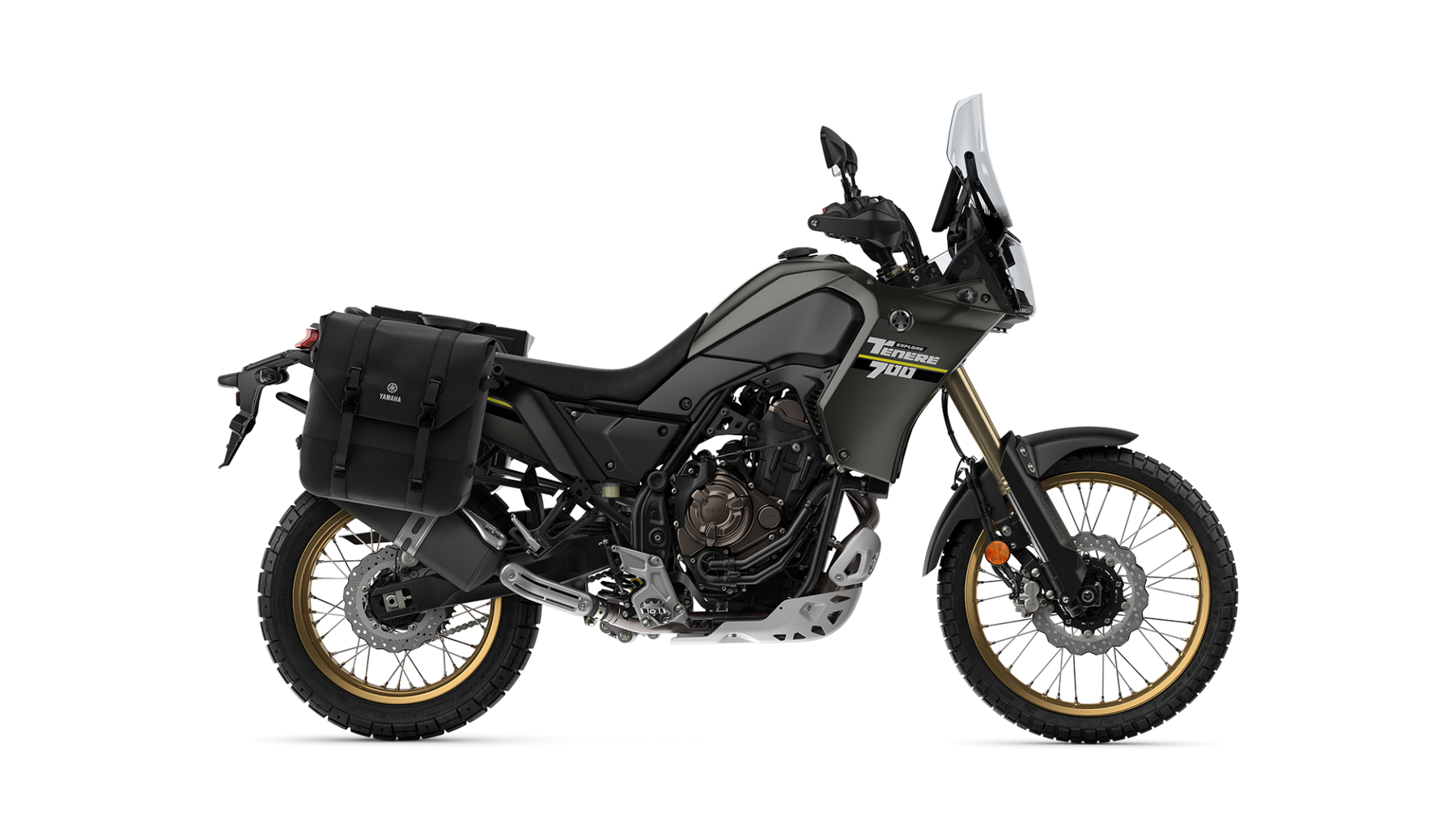
Is the Ténéré 900 finally coming?
A Ténéré 900 with a three-cylinder engine currently counts as the most likely option. Yamaha’s model range has a conspicuous gap at exactly that point.
The families built around the CP2 twin and the CP3 triple largely mirror each other: the R7 has the R9, the XSR700 has the XSR900. The striking exception is the adventure bike. Alongside the Ténéré 700 with the CP2, there is so far no counterpart using the larger triple.
This possibility does not add up entirely without contradiction, though. If Yamaha is essentially following the path Triumph took long ago, the claim of challenging the industry’s rhythm sounds fairly hollow. The same problem arises if a larger three-cylinder Ténéré is meant to take on the Tiger 1200 head-on. It is therefore also conceivable that this is simply marketing and that Yamaha just wants to sound like something fundamentally new is on the way.
What other possibilities are in play?
Besides the adventure bike, several options are being discussed that would sit considerably further away from the familiar. All of them fit the three peaks, but they head in different directions.
A smaller triple would be possible, perhaps in the class around 500 cubic centimetres. A three-cylinder engine that is not an inline unit would also be conceivable. Honda is working on exactly such a concept with the V3R: there the first and third cylinders are angled forwards while the second points backwards, together producing an angle of 75 degrees. What the crankshaft of that engine looks like is not known, but an uneven firing order is likely to come out of it as well.
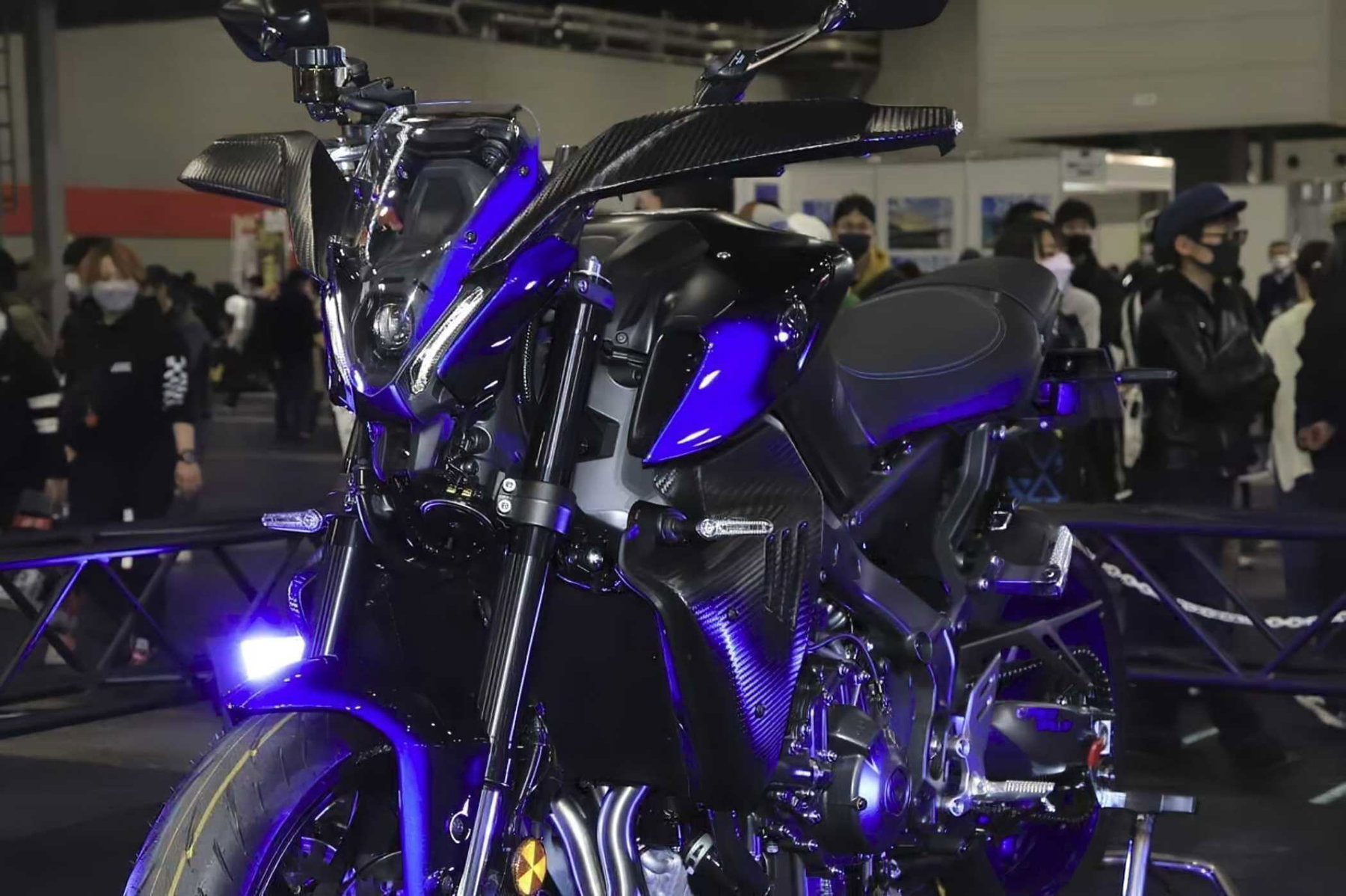
A third possibility ties in with the English word „standard“, which in American usage denotes a naked bike, in other words a motorcycle without fairing. In Europe the MT-10 has meanwhile been dropped from the range, leaving a gap at that point. Yamaha already built a supercharged triple back in 2020 and fitted it into a converted MT-10, after which the project went quiet. The company later filed a patent application for an electrically assisted turbocharger. A supercharged naked bike would live up to the claim of redefining the standard far better than yet another adventure bike.
When will we know for certain?
Yamaha will solve the puzzle on 2 November, one day before EICMA begins. Until then every reading remains speculation.
The teaser therefore slots into a show season in which several manufacturers are already lining up their new machines for the 2026 model year. Whether Yamaha actually lives up to its own claim, or whether a solid but predictable model ends up on the stand, will be decided in Milan.
Frequently Asked Questions
-
When will Yamaha unveil the new machine?
The date is 2 November in Milan. That is the day before EICMA opens. Yamaha has not released any further details ahead of it.
-
What does Yamaha’s EICMA 2026 announcement say?
The notice is titled „Redefine the Standard“ and shows an ECG graphic with three uneven peaks. It states that the industry has followed the same rhythm for long enough and that Yamaha is ready to challenge it. No model name is given.
-
Which three-cylinder engine does Yamaha currently offer?
Yamaha uses the CP3, which started out in 2014 in the MT-09 with 847 cubic centimetres and later grew to 890 cubic centimetres. It works with a 120-degree crankshaft and an even firing order of 240-240-240 degrees. It is fitted to the Tracer 9, the XSR900 and the YZF-R9 among others.
-
Does the Ténéré 900 officially exist?
No, Yamaha has not confirmed any model of that name so far. Alongside the twin-cylinder Ténéré 700 there is currently no counterpart using the larger triple. Whether that changes on 2 November remains open.
-
What is Triumph’s T-Plane engine?
It is a three-cylinder engine with an uneven firing order of 180-270-270 degrees, used in the Tiger 1200 and the Tiger 900. According to Triumph, this layout improves throttle response at low revs and traction off road.
➜ This article is part of our comprehensive overview: New Motorcycles 2026: All Models, Releases, and Highlights at a Glance. Find all key information on this topic in one place.