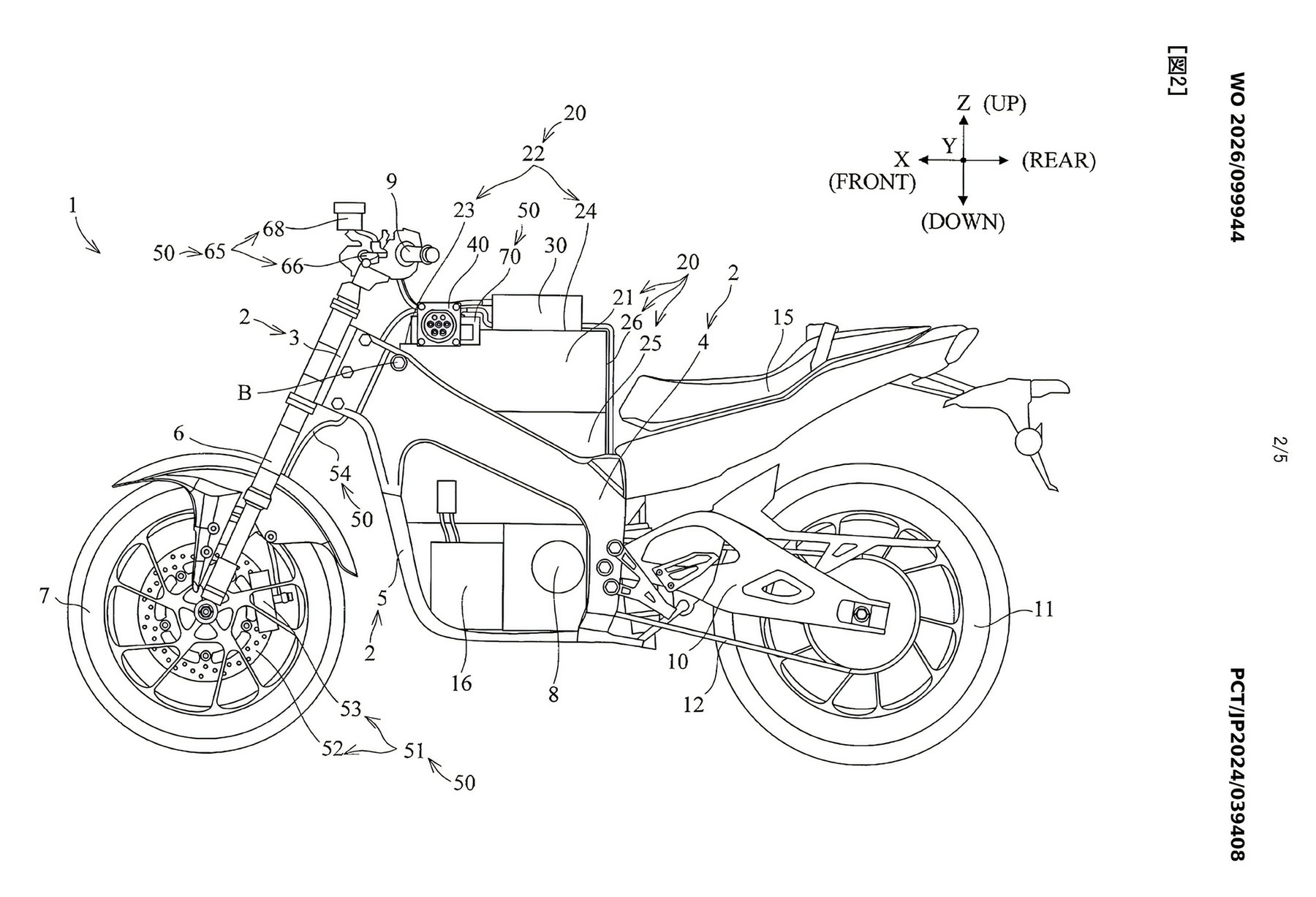
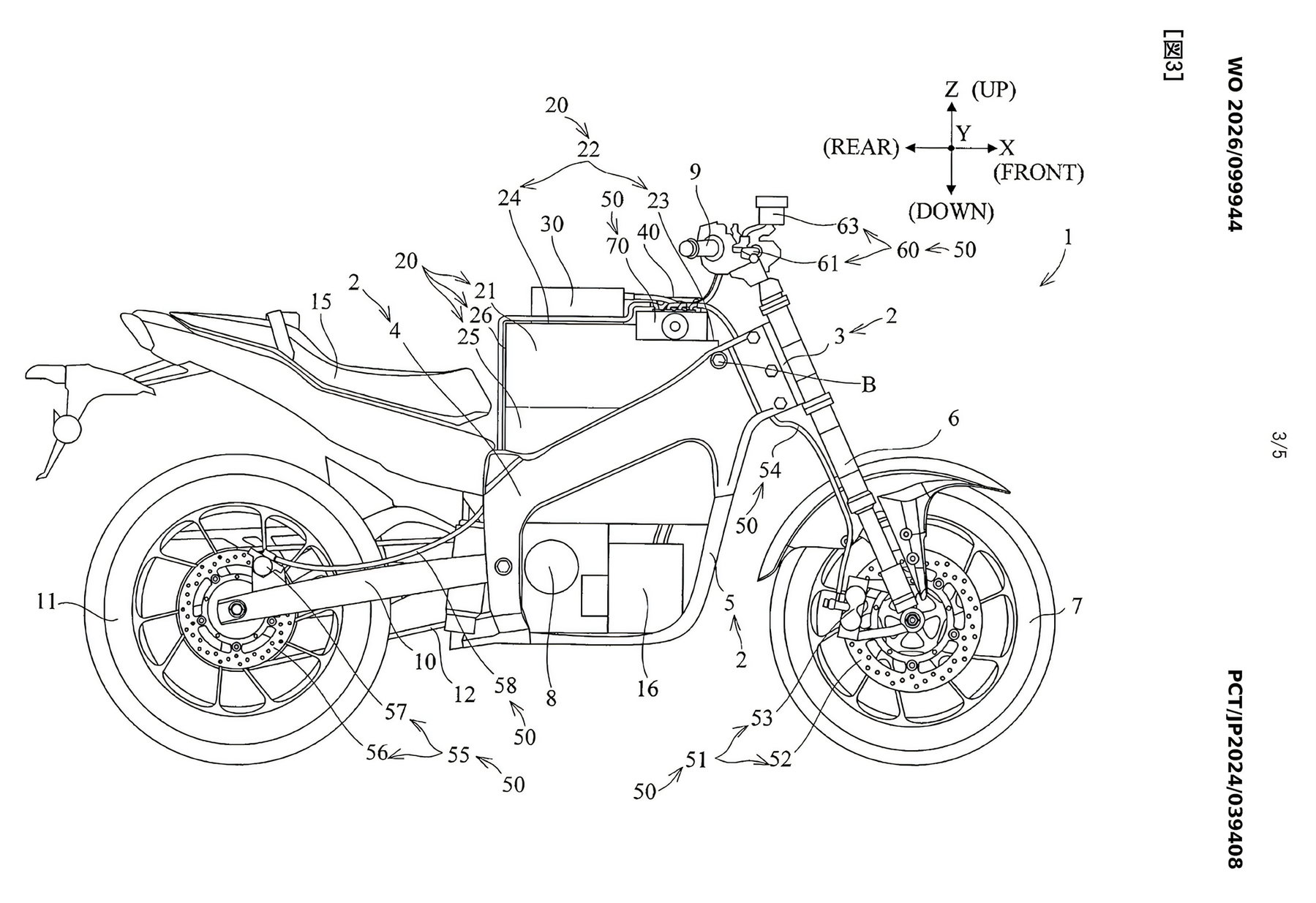
- The patent reveals a street-oriented electric motorcycle based on the Proto BEV.
- The ABS hydraulic unit is positioned behind the steering head to improve response times.
- A Type 2 connector enables AC charging at 7.4 kW single-phase and 22 kW three-phase.
Yamaha has been offering electrically powered models for more than two decades, specifically scooters, in both Asian and European showrooms. The major breakthrough for electric two-wheelers has yet to materialize, with the combustion engine continuing to dominate sales charts. Behind the scenes, however, Yamaha’s development of a street-legal electric sportbike appears to be ongoing, as suggested by a new patent. At first glance, the document merely describes a technical detail of the braking system, but it actually provides a whole range of additional clues about the vehicle. This positions the project within the broader electric offensive by Japan’s major manufacturers.
What Does the New Yamaha Patent Reveal About the Electric Sportbike?
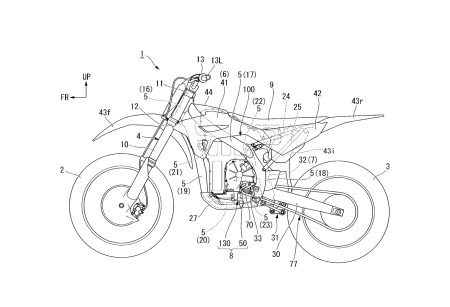
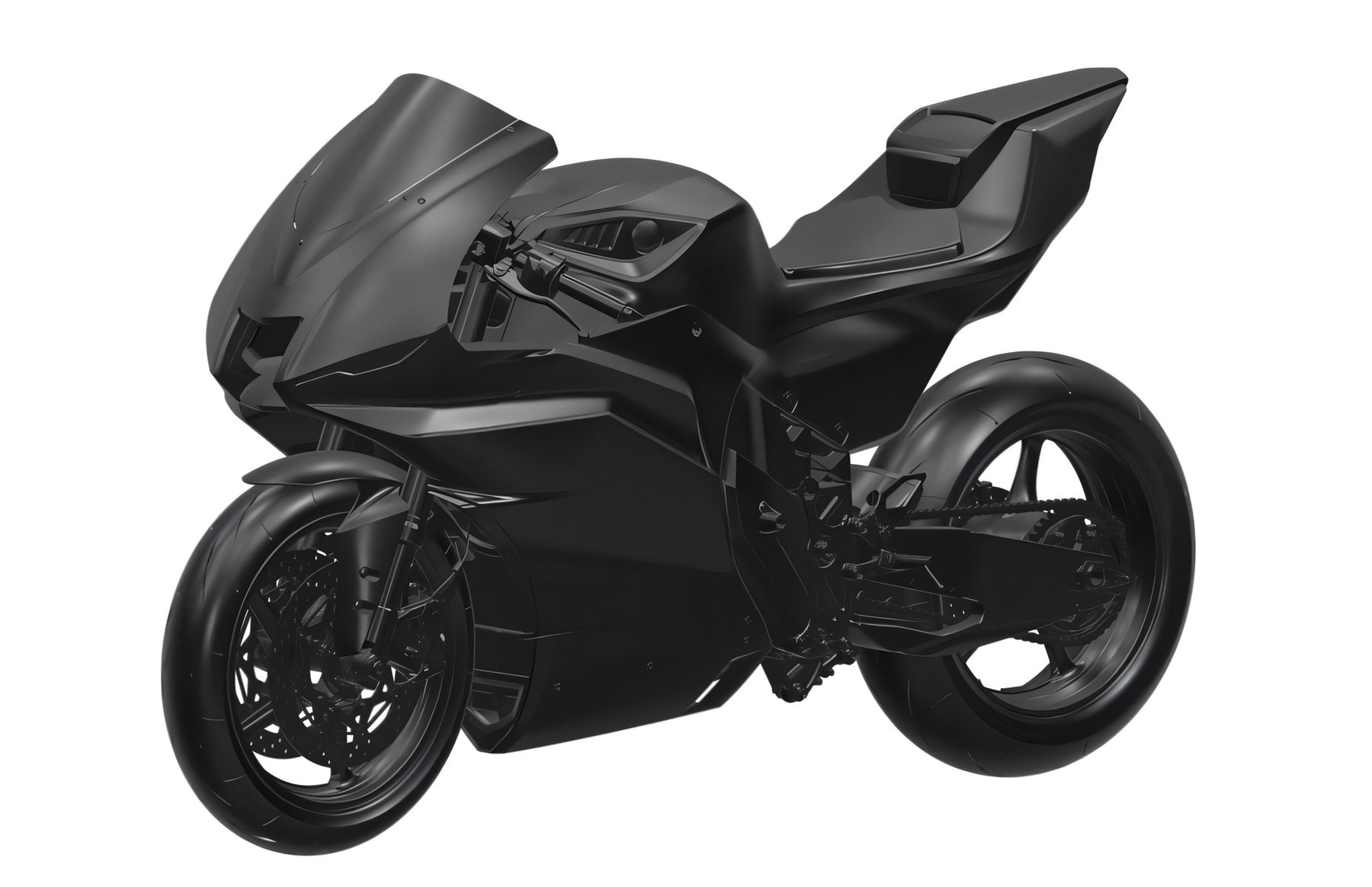
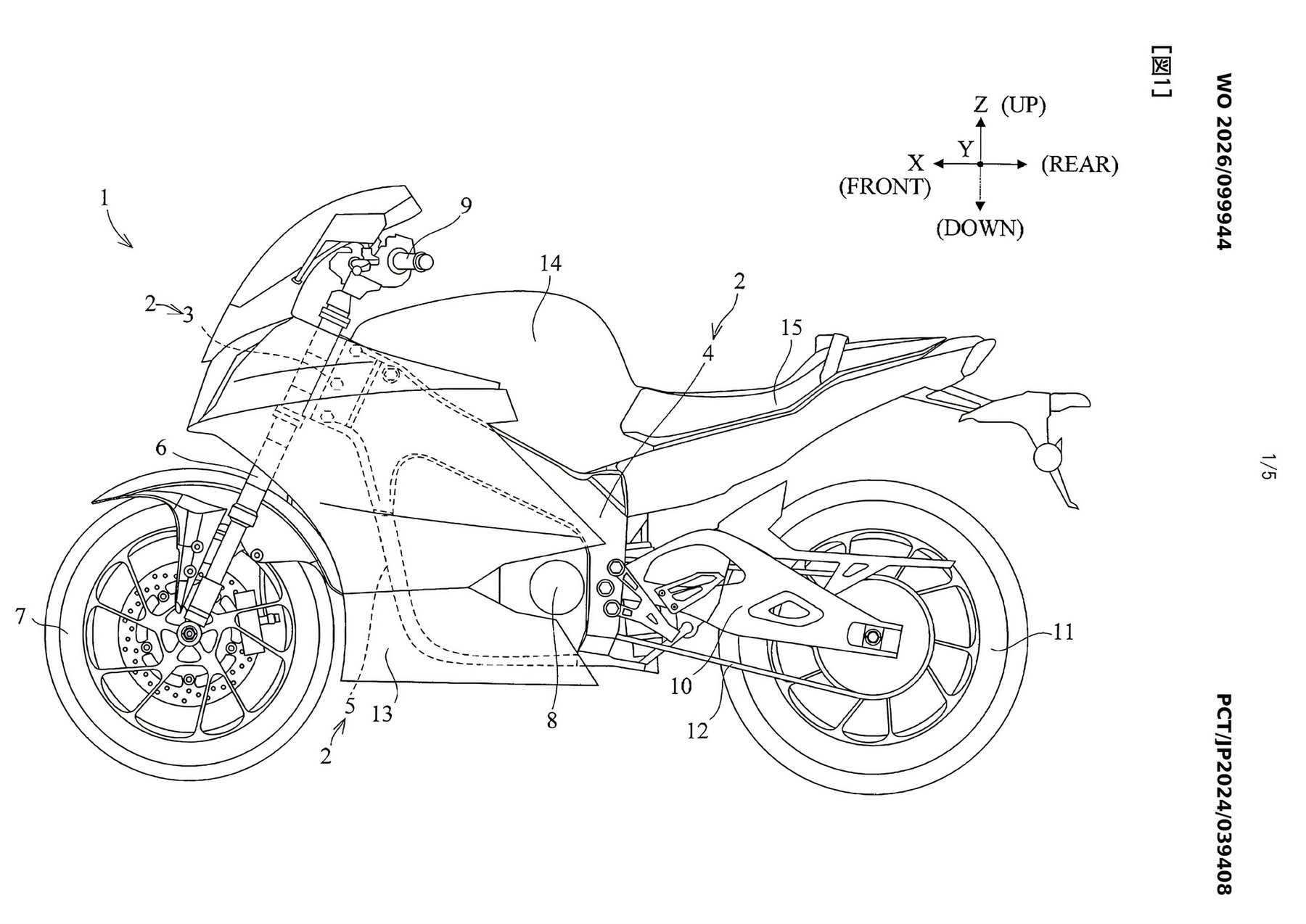
The patent officially describes the position of the ABS unit, but reveals a street-legal electric motorcycle closely related in design to the track study Proto BEV. The patent drawings depict a vehicle whose basic layout resembles the previously presented study, including a beam frame enclosing a large battery pack. Unlike the pure track machine Proto BEV, the model shown in the patent is designed for road use. According to the drawings, its dimensions fall within a range reminiscent of the YZF-R7. This suggests that the track study could evolve into a practical production concept in the medium term.
Why Is the ABS Unit Positioned Behind the Steering Head?
According to the patent, the ABS hydraulic control unit is not located under the seat as is customary but directly behind the steering head to shorten the brake lines. Yamaha justifies the arrangement by stating that shorter lines to the front and rear master cylinders improve the anti-lock braking system’s response time. Notably, the patent also adopts the control concept common to electric motorcycles: instead of a foot-operated brake pedal for the rear brake, there is a lever on the left handlebar, where the clutch lever would normally be. Whether this patent can be upheld is uncertain, as other manufacturers have already placed the ABS unit in a similar location.
How Fast Does the Yamaha Electric Sportbike Charge?
The patent shows an AC fast charger with a Type 2 connector that supports 7.4 kW single-phase and 22 kW three-phase charging, making it significantly faster than a standard household outlet. The so-called Mennekes or Type 2 connector is the most common single- and three-phase charging connector on the European market and is also used by the Honda WN7, among others. From the charger, energy flows to a charge controller positioned above the large, rectangular battery pack. The motor controller is located in the front section of the motorcycle, just ahead of the electric motor. According to the patent, the battery housing is made of die-cast aluminum and also serves a structural function for the components attached to it. Since only a few current electric models offer such AC fast charging—notably select Zero models, the Can-Am Pulse and Origin, and the Honda WN7—the battery capacity of this Yamaha concept likely exceeds that of many current electric motorcycles.
How Much Power Does the Electric Yamaha Model Have?
The patent does not specify any performance figures. However, Yamaha’s own electric drive business offers a clue: the manufacturer supplies motors to external customers, covering a range from approximately 48 hp (35 kW) to approximately 476 hp (350 kW). While this provides a technical foundation for a powerful drivetrain, the actual specification of the patent vehicle remains open. Reliable conclusions about the final output cannot be drawn from the available documents.
The Proto BEV as a Foundation and Yamaha’s Long Road
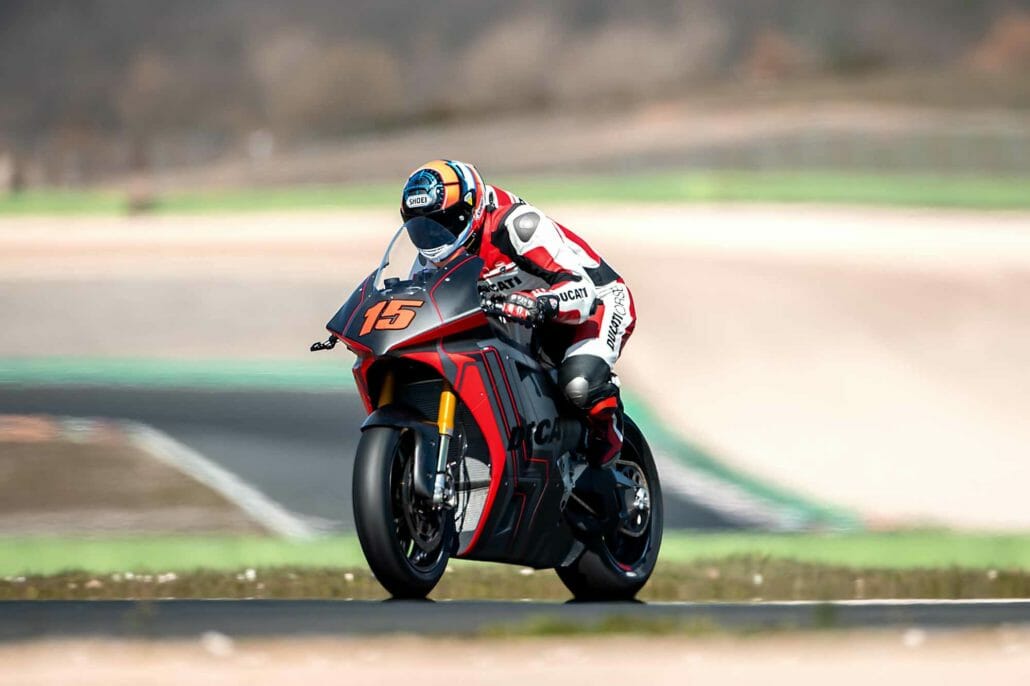
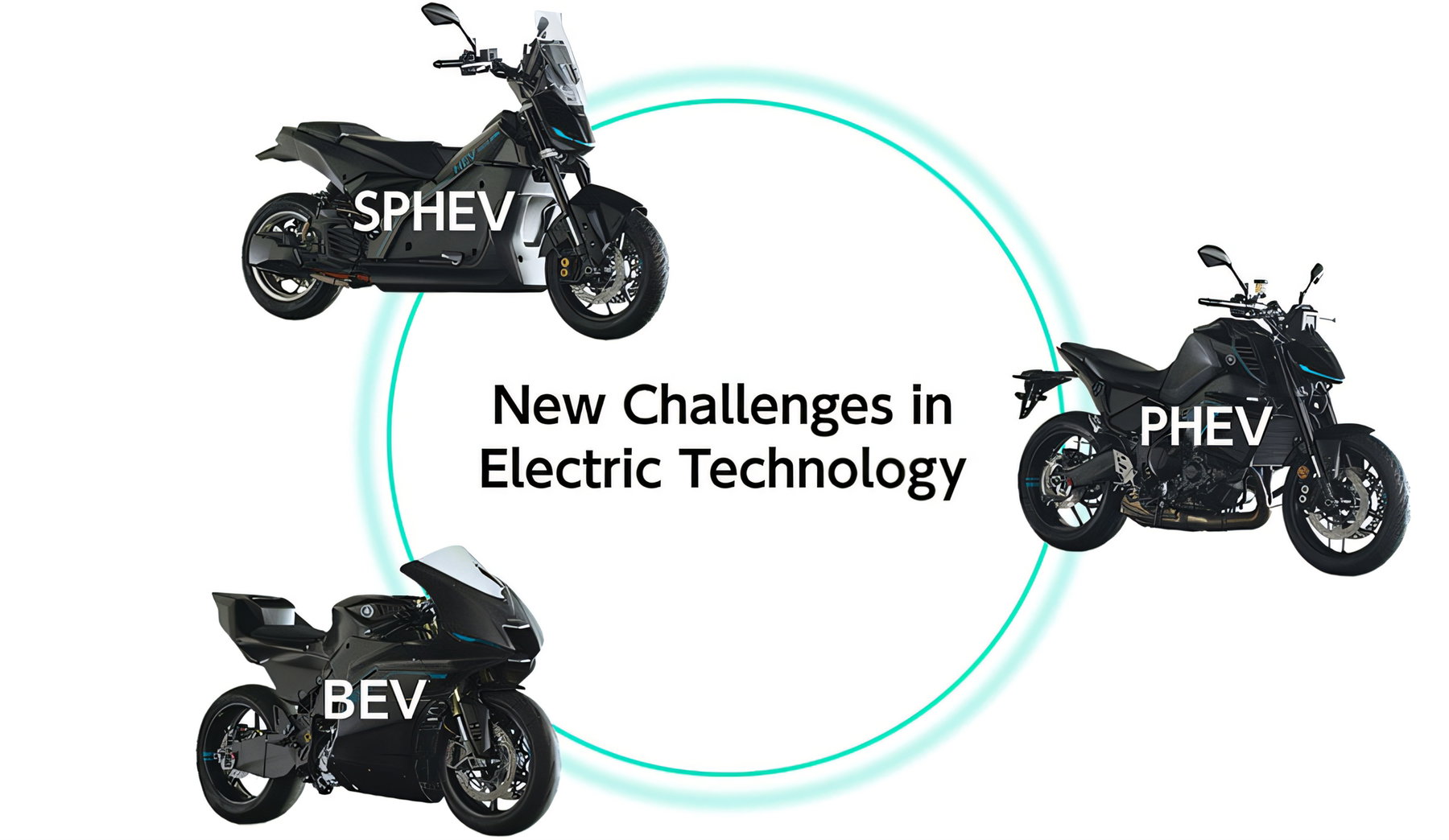
The design language visible in the patent traces back to the Proto BEV, which Yamaha presented at the Japan Mobility Show 2025. According to Yamaha, it is the third model in a series of dedicated electric vehicles and a study conceived as a supersport machine. The manufacturer describes the development goal as an accessible electric supersport that offers a novel riding character and makes the performance of an electric drive tangible. Four priorities take center stage: low weight and compact dimensions, the handling stability typical of Yamaha through a specifically designed battery shape and arrangement, strong yet well-controllable acceleration, and a simple user interface to reduce rider workload on the track. Additional features include a display visualizer synchronized with the vehicle’s behavior and a sound device that makes the drivetrain audible.
Yamaha’s interest in electric sport machines is not new. The company showed corresponding concepts with the PES1 and PES2 studies as early as 2013 and 2015, and according to a business report at the time, Yamaha planned to bring an electric sport motorcycle to market within two years. That timeline was later revised to an indefinite near future, and an electric sportbike remains absent from the lineup to this day. Against this backdrop, the current patent reads as a sign that the project continues to be pursued. According to media reports, the Honda WN7 is considered the first mass-produced, high-performance electric motorcycle from one of Japan’s Big Four manufacturers. Should that model gain traction in the market, Yamaha could, according to those reports, be among the first to offer a direct competitor.
Frequently Asked Questions
-
What does the new Yamaha patent show?
The patent reveals a street-legal electric motorcycle based on the track study Proto BEV. It officially protects the position of the hydraulic ABS unit but also discloses further details about the vehicle, including the frame, charging technology and component arrangement.
-
How does the Yamaha electric sportbike charge?
According to the patent, the Yamaha electric sportbike uses an AC fast charger with a Type 2 connector. This enables 7.4 kW single-phase and 22 kW three-phase charging, which is significantly faster than a standard household outlet.
-
How much horsepower does the Yamaha electric sportbike have?
The patent does not specify any performance figures for the Yamaha electric sportbike. As a reference point, Yamaha’s own electric motor range covers approximately 48 hp (35 kW) to approximately 476 hp (350 kW).
-
What is the Yamaha Proto BEV?
The Proto BEV is a purely track-focused electric study conceived as a supersport machine. Yamaha presented it at the Japan Mobility Show 2025 as the third model in a series of dedicated electric vehicles.
➜ This article is part of our comprehensive overview: Motorcycle Patents and Future Technology: What Manufacturers Are Developing. Find all key information on this topic in one place.